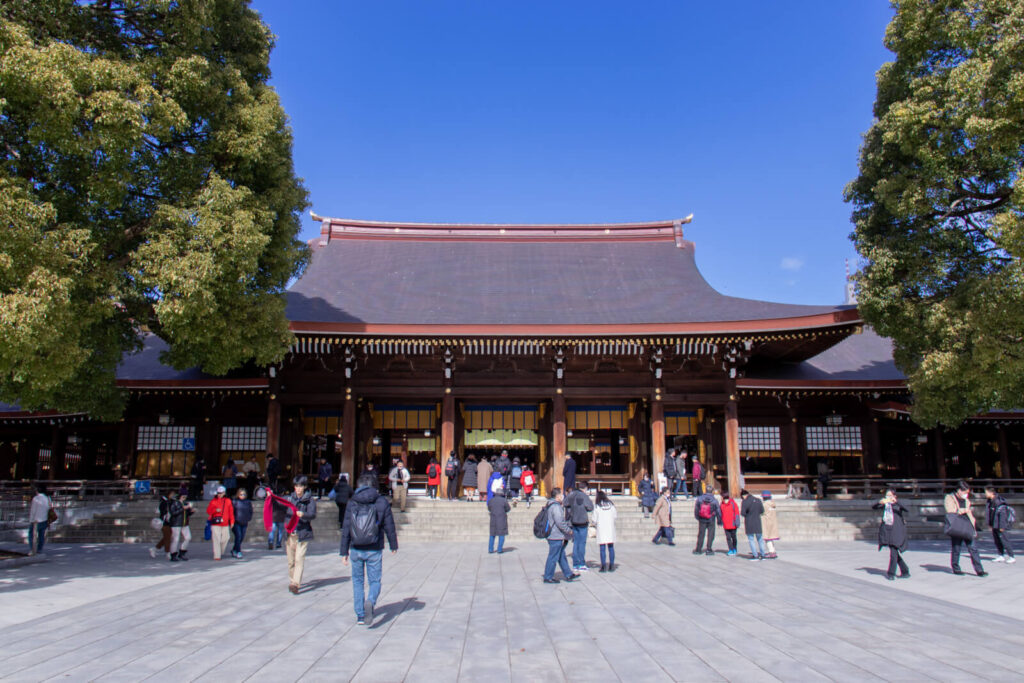
Located between the buzzing districts of Harajuku and Shibuya, Meiji Jingu Shrine is Tokyo’s most iconic spiritual landmark. While it is famous for hosting the highest number of visitors in Japan for the New Year’s prayers, its true allure lies in being a massive “Urban Oasis”—a 170-acre forest with 100,000 trees that offers a profound “mental reset” from the city’s neon lights.
Dedicated to Emperor Meiji and Empress Shoken, this shrine is not just a historical monument; it is a cluster of high-energy “Power Spots” believed to bring luck in love, health, and prosperity.
Contents
- 👑 The Miracle of the “Eternal Forest”: A Man-Made Ancient Woodland
- ✨ Boost Your Fortune: The Ultimate Spiritual Route
- 1. The South Approach & The First Torii (Entrance to Good Connections)
- 2. Sakedaru: The Intersection of Japanese & Western Prayer
- 3. Meoto Kusu (The Married Camphor Trees): Love & Family Symbol
- 4. The Haiden & Honden: The Epicenter of Spiritual Energy
- 5. Kameishi (The Turtle Rock): Health and Longevity
- 6. Treasure House & Sazare-ishi (The Sacred Stone)
- 7. Kiyomasa’s Well: The Famous “Dragon Hole”
- 📜 Keepsakes: Unique Omikuji and Charms
- 📌 Essential Information & Access
👑 The Miracle of the “Eternal Forest”: A Man-Made Ancient Woodland
Founded in 1920, Meiji Jingu’s forest is a masterpiece of sustainability. It was originally a wasteland, but 100,000 trees were donated from all over Japan and planted by hand with a 100-year vision in mind.
Today, it has evolved into a self-sustaining ecosystem that looks like a primeval forest. As soon as you step through the massive Torii gates, the temperature drops, the noise of Harajuku fades, and the scent of ancient wood takes over.
✨ Boost Your Fortune: The Ultimate Spiritual Route
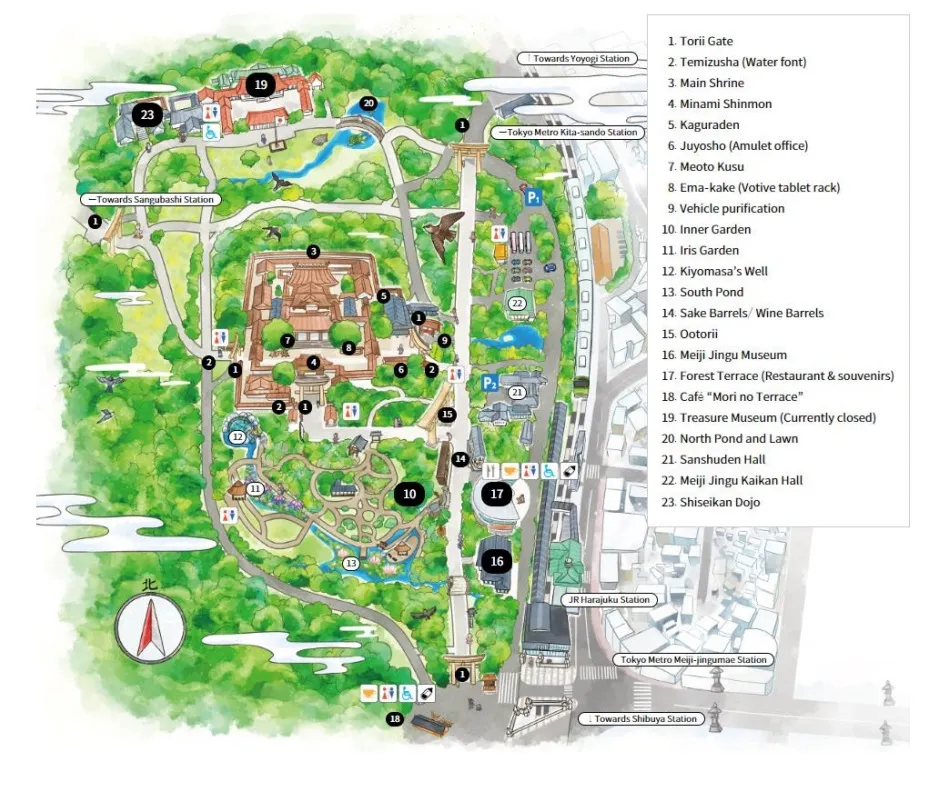
Meiji Jingu is filled with diverse energies—cleansing, healing, and empowering. Follow this recommended route to experience the most potent spots efficiently.
Meiji Jingu Map
1. The South Approach & The First Torii (Entrance to Good Connections)
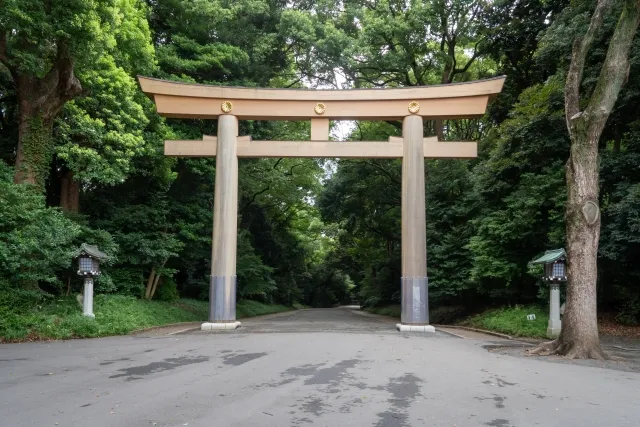
Entering from Harajuku Station via the Minami-sando (South Approach) is considered the best route for improving relationships and finding “good connections.”
- The New Symbol: The main Torii gate was rebuilt in 2022 using 260-year-old Japanese cypress (Hinoki). It concentrates the life energy of forests from across Japan, serving as a powerful gateway to the sacred realm.
2. Sakedaru: The Intersection of Japanese & Western Prayer
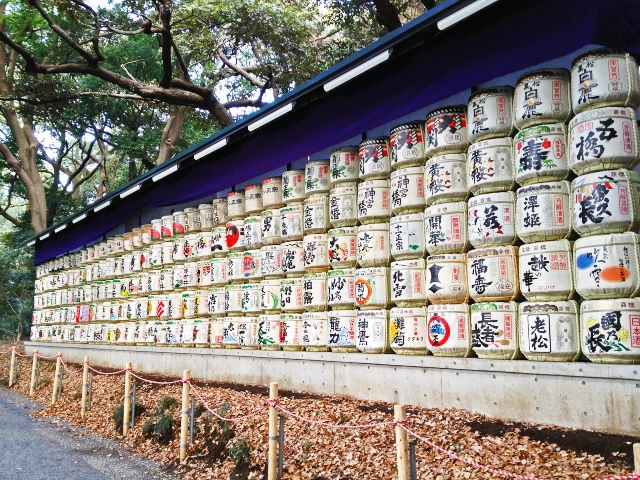
Walking the path, you will encounter rows of beautifully decorated sake barrels (Kazaridaru).
- The Sake Barrels: Donated by brewers nationwide as a sign of respect and prayer for the Emperor.
- The Wine Barrels: A very rare sight in a Japanese shrine! Emperor Meiji was known for his love of wine and his proactive embrace of Western culture. These barrels, donated by the famous chateaux of Burgundy, France, symbolize the unique cultural fusion of the Meiji era.
3. Meoto Kusu (The Married Camphor Trees): Love & Family Symbol
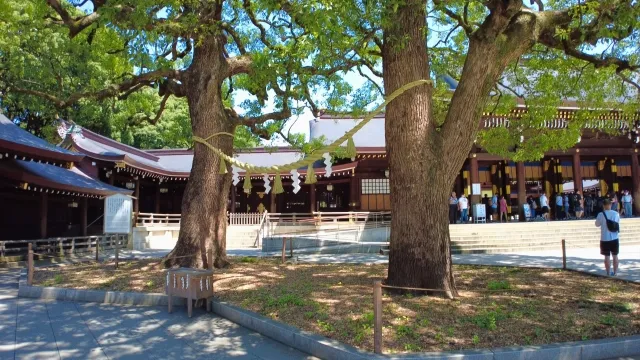
Standing just before the Main Hall are two massive camphor trees connected by a sacred rope (Shimenawa).
- Symbol of Devotion: These trees are named “Meoto Kusu” (Husband and Wife Camphor Trees) because they appear to be leaning toward each other. They symbolize the deep bond between Emperor Meiji and Empress Shoken, making this a famous spot for success in love, marital harmony, and family safety.
4. The Haiden & Honden: The Epicenter of Spiritual Energy
This is the heart of the shrine where all the forest’s energy converges.
- Haiden (Offering Hall): The building where we stand to pray.
- Honden (Main Sanctuary): The most sacred area behind the Haiden where the spirits of the Emperor and Empress reside.
- Etiquette: Purify your hands and mouth at the Temizuya fountain first. At the hall, follow the “2 bows, 2 claps, 1 bow” ritual. Praying here is the most direct way to connect with the divine energy of the shrine.
5. Kameishi (The Turtle Rock): Health and Longevity
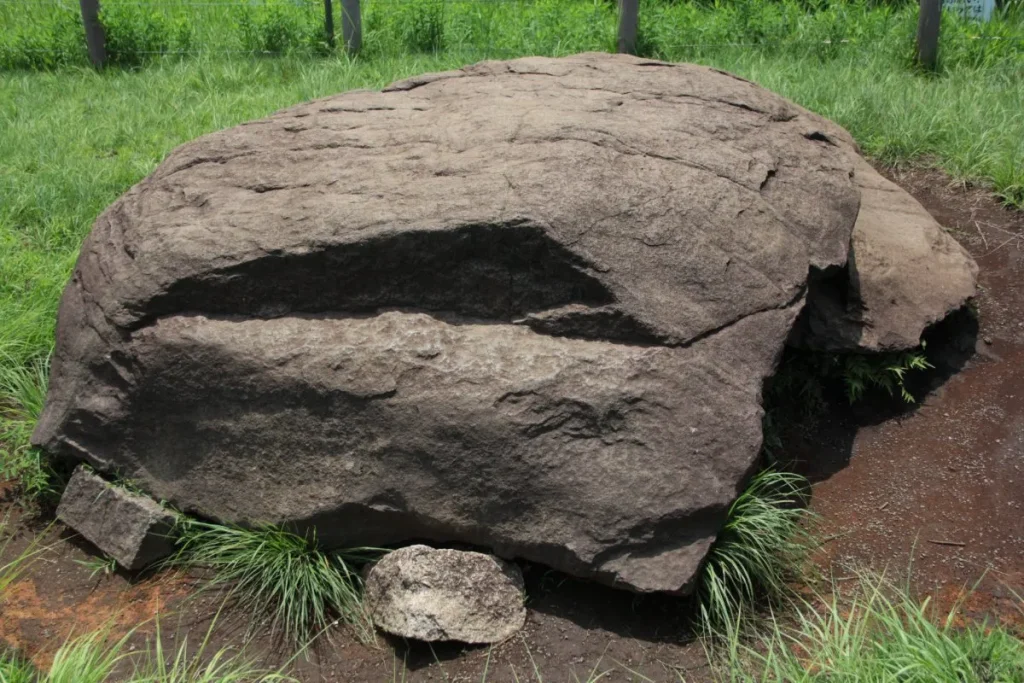
Located in the northern “Sacred Zone” near the Treasure House, this area is known for purifying the mind and “opening new paths” in life.
- The Rock of Longevity: Shaped like a turtle, this rock is a power spot for health and long life. In Feng Shui, turtles are also auspicious symbols for boosting career and financial luck.
6. Treasure House & Sazare-ishi (The Sacred Stone)
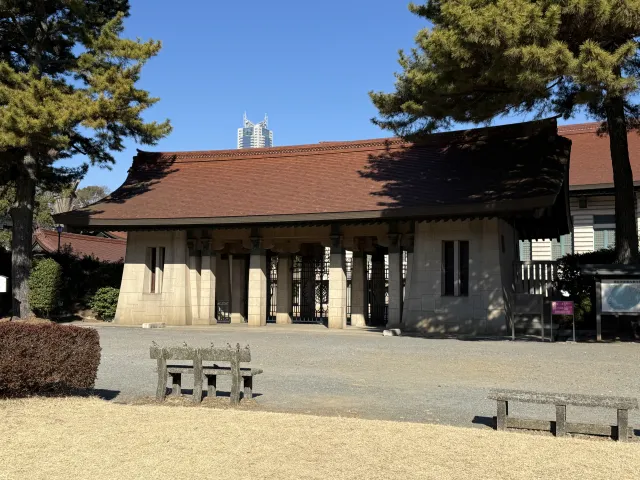
The Treasure House is a masterpiece of early reinforced concrete architecture and a National Important Cultural Property.
- Sazare-ishi: This sacred rock, mentioned in the Japanese national anthem, is formed by small pebbles fusing together over eons. It is believed to possess strong cleansing and purification powers.
7. Kiyomasa’s Well: The Famous “Dragon Hole”
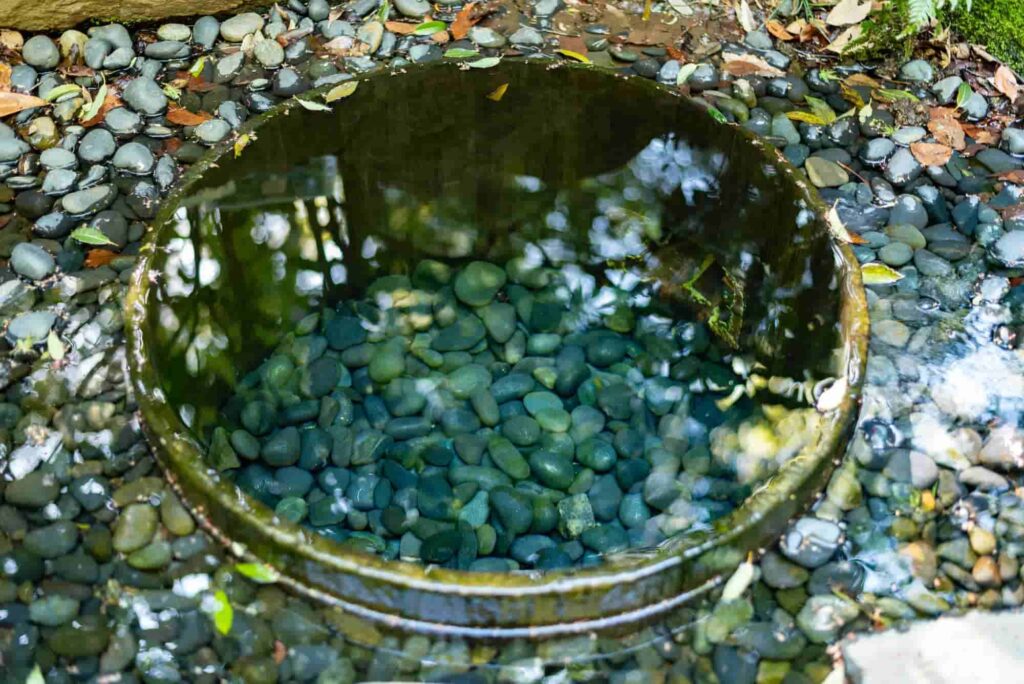
Located inside the Meiji Jingu Inner Garden (Entry: 500 yen), this is the shrine’s most legendary power spot.
- Feng Shui Energy: The well sits directly on a “Dragon Vein”—a flow of energy from Mt. Fuji to the Imperial Palace. It acts as a “Dragon Hole” where spiritual energy gushes out. It is said to purify bad luck and significantly boost financial fortune.
- Pro Tip: Visit on a sunny day during the afternoon. It is believed that visiting on rainy days or after sunset may attract “Yin” (negative) energy.
📜 Keepsakes: Unique Omikuji and Charms
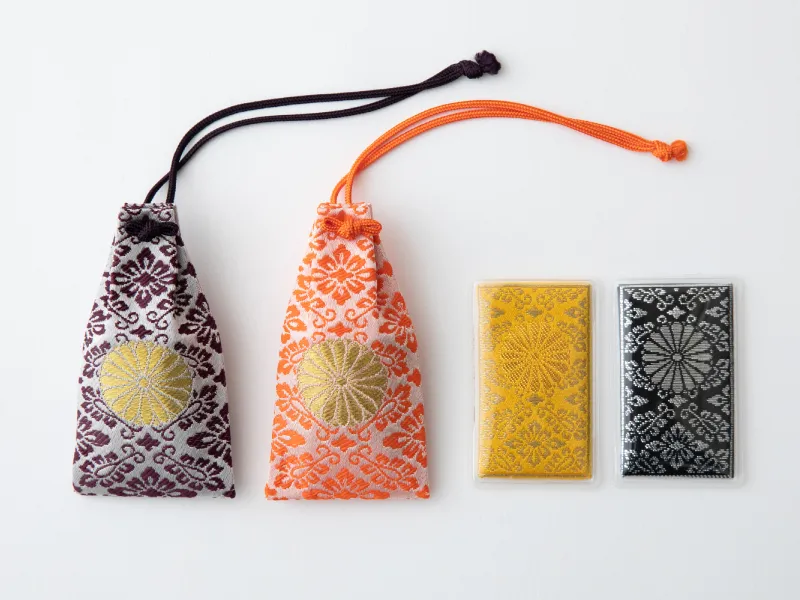
- Omigokoro (Imperial Poetry): Unlike other shrines, Meiji Jingu’s fortune slips do not have “Great Luck” or “Bad Luck.” Instead, they feature Waka poetry written by the Emperor or Empress with English explanations—serving as a spiritual guide for your life.
- Unique Amulets: Popular charms include “Kodama” (wooden bells made from the shrine’s sacred trees) and “Enmusubi” (charms for finding love).
- Goshuin: You can receive a beautiful hand-brushed calligraphy stamp at the Nagadono office.
📌 Essential Information & Access
Meiji Jingu is highly accessible from Tokyo’s major hubs.
Address: 1-1 Yoyogikamizonochō, Shibuya City, Tokyo
Access:
- JR Yamanote Line: 1 min walk from Harajuku Station (West Exit).
- Tokyo Metro Chiyoda/Fukutoshin Line: 1 min walk from Meiji-jingumae Station.
- JR/Toei Oedo Line: 5 min walk from Yoyogi Station.
- Odakyu Line: 3 min walk from Sangubashi Station.
Hours: The shrine opens at sunrise and closes at sunset (Approx. 5:00 AM – 6:00 PM depending on the month).
Admission:
- Shrine Grounds: Free
- Inner Garden (Kiyomasa’s Well): 500 yen (Maintenance donation)
- Meiji Jingu Museum: 1,000 yen (General)
Official Website (English): https://www.meijijingu.or.jp/en/