The Yamanote Line (山手線, Yamanote-sen) is arguably the most convenient and essential mode of transport for anyone visiting Tokyo. It seamlessly connects world-famous hubs like Shibuya, Shinjuku, and Ikebukuro, serving as the primary artery for exploring the city.
This guide provides all the must-know information for first-time users, covering the line’s fundamentals, a detailed look at the 11 key stations and their attractions, tips for smooth travel, and valuable money-saving passes. Master the Yamanote Line, and you master Tokyo!
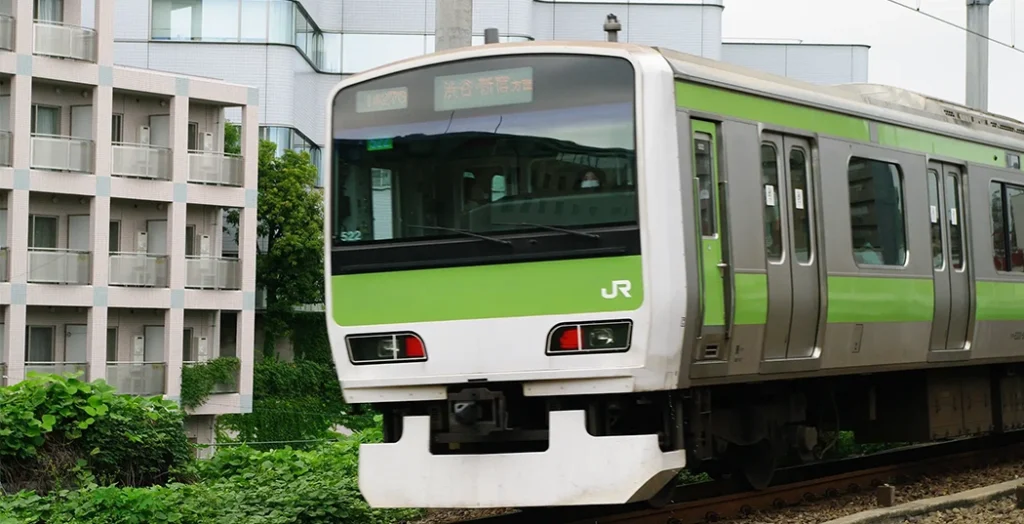
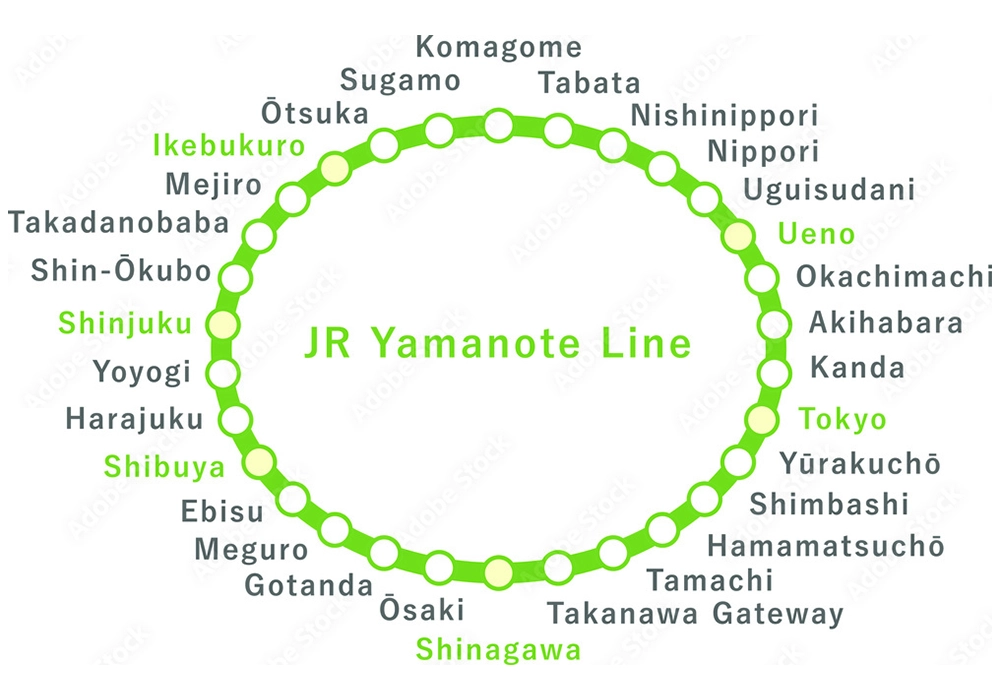
The Yamanote Line is a large loop line operated by JR East, circling the central districts of Tokyo.
Key Fact
Detail
Total Length & Stations
Approx. 34.5 km, connecting 30 stations in about 1 hour for a full loop.
Major Hubs
Tokyo, Shinjuku, Shibuya, Shinagawa, and Ikebukuro are all on this line.
Frequency
Trains run at a high frequency of every 3 to 5 minutes, minimizing wait times.
Operating Hours
Generally runs from 4:30 AM to around 1:00 AM (varies by station/direction).
Line Color
“Uguisu” green (a distinctive light yellowish-green).
Loop System
Directions are guided by “Outer Loop (Clockwise)” and “Inner Loop (Counter-Clockwise)” instead of destination names.
Good to Know: While commonly called a loop line, the Yamanote Line is officially only the segment between Shinagawa and Tabata stations. The entire operating system is collectively branded as the “Yamanote Line.”
5 Essential Tips for Riding the Yamanote Line
To ensure a smooth journey on your first attempt, here are five crucial points to keep in mind:
1. Always Check “Outer” vs. “Inner” Loop
Mistaking the direction can lead to a long detour, potentially adding up to an hour to your travel time.
Direction
Movement
Key Destinations
Recommendation
Inner Loop
Counter-Clockwise
Ueno, Tokyo Station
Use for shorter trips east (e.g., from Shinjuku to Ueno).
Outer Loop
Clockwise
Shibuya, Shinjuku
Use for shorter trips west (e.g., from Shinagawa to Shibuya).
Pro Tip: Check the signboards and train announcements for the destination areas (e.g., “Shibuya / Shinjuku area”) to confirm your direction.
2. Mind the Short Stops
The distance between Yamanote Line stations is very short, often resulting in short travel times. Sections like Nippori to Nishi-Nippori or Kanda to Akihabara take only 1–3 minutes. Stay attentive to the in-car announcements and digital displays, especially if your destination is only a few stops away.
3. If You Miss Your Stop, Go Back Immediately
If you accidentally pass your destination, get off at the next stop and transfer to the train running in the opposite direction (Inner or Outer Loop). Continuing on the same train will take you all the way around the loop, costing you about an hour.
4. Plan Around Peak Rush Hours
While usually reliable, the Yamanote Line gets very crowded during rush hours.
Morning Peak (7:00 AM – 8:00 AM): Heaviest congestion is typically on the Outer Loop (Ueno to Okachimachi) and the Inner Loop (Shin-Okubo to Shinjuku).
Evening Peak: Weekdays from 6:00 PM to 7:00 PM, and late on Friday nights (around 11:00 PM).
Weekend Crowds: Expect slightly increased congestion around noon on Saturdays and Sundays.
Note: To ensure a more comfortable sightseeing experience, travelers are strongly advised to plan their journeys outside of Tokyo’s morning and evening rush hours, thereby avoiding the worst of the crowds.
5. Consider Express and Rapid Lines
The Yamanote Line is a local line (stopping at every station). For longer distances, faster JR lines running parallel to the Yamanote Line (such as the Chuo Line Rapid or Tokaido Main Line) might be quicker. Always check a navigation app for the fastest route, especially when traveling between major hubs like Shinagawa and Tokyo Station.
✈️ Access to Yamanote Stations from Tokyo’s Airports
Haneda Airport (HND) Access
Both major lines connect to key Yamanote stations, offering flexibility based on your final destination.
Route
Yamanote Transfer Station
Travel Time (Avg.)
Fare Note
Keikyu Line
Shinagawa Station
Approx. 30 min
Often slightly cheaper than the Monorail.
Tokyo Monorail
Hamamatsucho Station
Approx. 25 min
Direct access to the eastern loop of Yamanote.
Narita Airport (NRT) Access
The fastest route from Narita Airport to the Yamanote Line is via Nippori Station.
Fastest Route: Take the Keisei Skyliner from Narita Airport to Nippori Station.
Travel Time: As fast as 36 minutes.
Feature: Comfortable, reserved seating, though the fare is higher (approx. ¥2,567 one-way).
Cost-Effective Option: Use the slower Keisei Main Line or JR rapid services to reach Tokyo Station or Shinjuku.
🗼 11 Must-Visit Yamanote Line Stations for Tourists
Explore Tokyo’s diverse personality by hopping off at these key Yamanote Line stations.
1. Shinjuku Station
The massive hub sitting in the center of Tokyo, famous for shopping, dining, and entertainment.
East Exit: Home to massive department stores, the neon-lit entertainment district of Kabukicho, and the retro alleyway Omoide Yokocho.
West Exit: Dominated by a cluster of skyscrapers and the Tokyo Metropolitan Government Building, where you can enjoy free panoramic city views.
Nature: Find an urban oasis at the beautiful Shinjuku Gyoen National Garden.
For a deep dive: [Shinjuku Area Article Link]
2. Shibuya Station
The epicenter of youth culture and trend-setting fashion, bursting with energy.
Landmark: Witness the iconic spectacle of the Shibuya Scramble Crossing, the busiest intersection in the world.
Shopping: Towering complexes like Shibuya Hikarie and Shibuya Scramble Square offer high-end shopping and incredible views from observation decks.
Experience: Ideal for those who want to experience cutting-edge culture and Tokyo’s urban dynamism.
For a deep dive: [Shibuya Area Article Link]
3. Ikebukuro Station
A major entertainment and cultural area comparable to Shinjuku and Shibuya.
Entertainment: Features Sunshine City (home to an aquarium and observatory), Seibu Department Store, and Parco.
Subculture: A key destination for anime and manga enthusiasts, with “Otome Road” catering to this passionate community.
For a deep dive: [Ikebukuro Area Article Link]
4. Tokyo Station
Japan’s central railway hub, a magnificent structure that is a tourist attraction itself.
History: The beautifully restored red-brick Marunouchi Station Building (1914) is a National Important Cultural Property.
Shopping: The station complex boasts massive underground shopping and dining areas like Gransta Tokyo and Tokyo Station Ichibangai.
Surroundings: Modern commercial buildings (KITTE, Shin-Maru Building) blend seamlessly with the tranquil, green space of the Imperial Palace East Garden.
For a deep dive: [Tokyo Station Area Article Link]
5. Shinagawa Station
A crucial transportation terminal for the Shinkansen (Bullet Train) and a highly redeveloped, modern business district.
Leisure: Offers numerous amenities, including the Maxell Aqua Park Shinagawa aquarium and movie theaters within the Shinagawa Prince Hotel complex.
History: The nearby Takanawa area retains historical streetscapes and ancient sites like Shinagawa Shrine.
For a deep dive: [Shinagawa Area Article Link]
6. Ueno Station
Tokyo’s northern gateway, where vibrant downtown culture meets high-brow arts and nature.
Culture & Nature: The massive Ueno Park houses the Ueno Zoo, Tokyo National Museum, and the National Museum of Western Art.
Shopping & Food: The bustling Ameya Yokocho (Ameyoko) Market offers budget shopping, street food, and a distinctly nostalgic, chaotic atmosphere.
For a deep dive: [Ueno Area Article Link]
7. Harajuku Station
The global center for “Kawaii Culture” and youthful fashion trends.
Fashion:Takeshita Street is famous for its colorful, unique shops and quirky street food (like giant cotton candy and crepes).
Spiritual Oasis: Right behind the station is Meiji Jingu, a massive, serene Shinto shrine and powerful spiritual spot surrounded by deep forest, offering a retreat from the city noise.
8. Akihabara Station
Affectionately called “Akiba,” this is the heart of Japanese pop culture and electronics.
Culture: The “Holy Land of Subculture” is packed with shops specializing in anime, manga, video games, idol goods, and Maid Cafés.
Atmosphere: A unique fusion of traditional downtown charm and dazzling modern entertainment, lit up by vibrant neon signs.
9. Nippori Station
A major transport interchange (Keisei Skyliner) that strongly retains its nostalgic, “Shitamachi” (downtown) feel.
Shitamachi Vibe:Yanaka Ginza Shopping Street is perfect for street food and souvenir hunting, offering a glimpse into the retro atmosphere of the Showa period.
Specialty: Home to the Nippori Textile District, a one-kilometer stretch with about 90 specialty fabric stores, popular with crafters.
10. Ebisu Station
An upscale, sophisticated area neighboring Daikanyama and Meguro, known for its refined atmosphere.
Atmosphere: Features high-end restaurants, fashionable boutiques, and a relaxed, adult ambiance.
Landmark:Ebisu Garden Place is a multi-use complex with restaurants, a museum, and a famous winter illumination display.
11. Meguro Station
A quiet, elegant residential and commercial area with excellent connections to central Tokyo.
Nature: The Meguro River is famous for its spectacular cherry blossoms in the spring. The area is ideal for a peaceful stroll year-round.
Culture: Nearby spots like the Hotel Gajoen Tokyo and the Tokyo Metropolitan Teien Art Museum showcase stunning blends of Japanese and Western aesthetics.
🎫 3 Best Value Passes for Yamanote Line Travel
For tourists planning to visit multiple areas, these passes can save both time and money.
1. Tokyo Free Kippu (Tokyo One-Day Pass)
A comprehensive ticket covering almost all transportation within the central Tokyo area.
Item
Detail
Price
Adult ¥1,600 / Child ¥800
Coverage
Includes Yamanote Line and other JR lines in the 23 wards, plus all Tokyo Metro, Toei Subway lines, Toei Buses, and the Nippori-Toneri Liner.
Recommended For
Travelers using both JR and the subway system for widespread exploration.
The name “Yamanote” originates from Tokyo’s historical geography. From the Edo to Meiji periods, the high-ground, western part of Tokyo (Shibuya, Shinjuku) was known as “Yamanote” (meaning “hand of the mountain”) and was associated with upper-class residences.
Fun Fact: The low-lying, commercial, and traditional eastern areas (like Ueno and Nippori) were called “Shitamachi” (downtown), a cultural contrast that still defines Tokyo today.
The Newest Station: Takanawa Gateway
The newest station on the Yamanote Line is Takanawa Gateway Station, which opened in 2020 between Shinagawa and Tamachi stations.
It is a centerpiece of JR East’s massive “TAKANAWA GATEWAY CITY” redevelopment, positioned as a hub for future urban living and cutting-edge technology. The surrounding complex, featuring commercial facilities and automated mobility systems, is slated for a grand opening in Spring 2026.
Fares for a Full Loop
Due to JR East’s “Special Provisions for Major Metropolitan Areas,” the fare is calculated based on the shortest distance between your start and end stations, not the actual route traveled.
Riding for a full loop (starting and ending at the same station): Approx. ¥500. However, you cannot pass through the automatic ticket gate and must explain your route to a station attendant.
The Easy Way: Purchase the Tokunai Pass (¥760) for worry-free, unlimited travel around the loop.
Conclusion: Master the Yamanote, Master Tokyo
The JR Yamanote Line is the undisputed backbone of Tokyo tourism. Its unparalleled convenience, high frequency, and direct access to every major shopping, business, and cultural area make it the best strategy for navigating the capital.
Use this guide as your starting point, and combine it with our detailed area articles to plan a seamless and rewarding stay in Tokyo!