While exploring the beautiful landscapes of Japan, you will encounter many “Temples” and “Shrines.” Many international travelers wonder, “They both look like sacred spaces, so what is the actual difference?”
In fact, these two have completely different histories, religious backgrounds, and sets of rules. Understanding these differences will transform your Japanese journey from simple sightseeing into a deep cultural experience.
Contents
- 1. The Fundamental Difference: Two Different Religions
- 2. How to Tell Them Apart: Visual Checkpoints
- 3. What is Inside? The Objects of Worship
- 4. The Essential Ritual: Purification at the Temizuya
- 5. Prayer Etiquette: The “Clapping” Difference
- 6. Photography, Dress Code, and Offerings
- 7. Iconic Examples in Japan
- 8. Glossary: Words to Remember
- Conclusion: Enjoy the Harmony of Japan
1. The Fundamental Difference: Two Different Religions
The most important thing to know is that temples and shrines belong to entirely different religions.
- Temples (O-tera): Buddhism Introduced to Japan from India/China about 1,500 years ago. Buddhism follows the teachings of Shaka (Gautama Buddha), focusing on enlightenment and offering prayers for the souls of the deceased.
- Shrines (Jinja): Shinto Japan’s indigenous, ancient religion. Shinto is based on the belief in “Yaoyorozu no Kami” (Eight Million Gods). It teaches that spirits reside in all things—mountains, rivers, thunder, and even respected historical figures.
2. How to Tell Them Apart: Visual Checkpoints
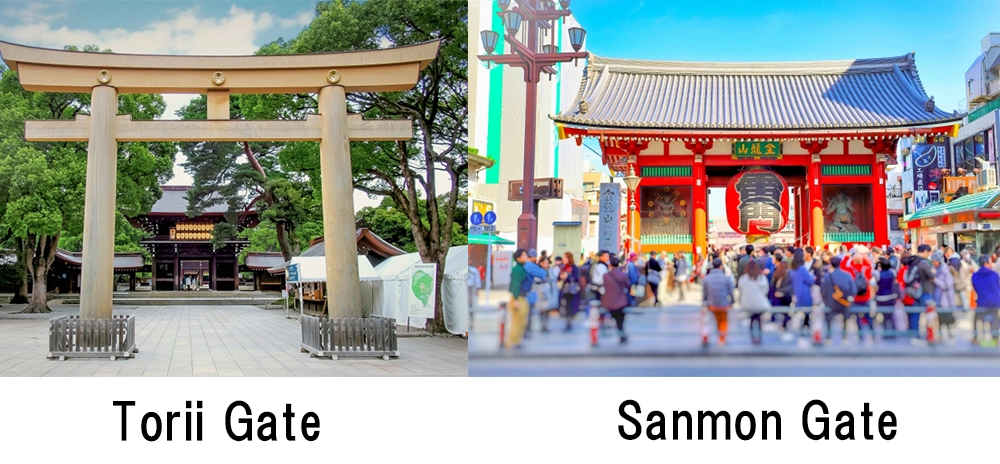
You can distinguish them just by looking at the entrance when you arrive.
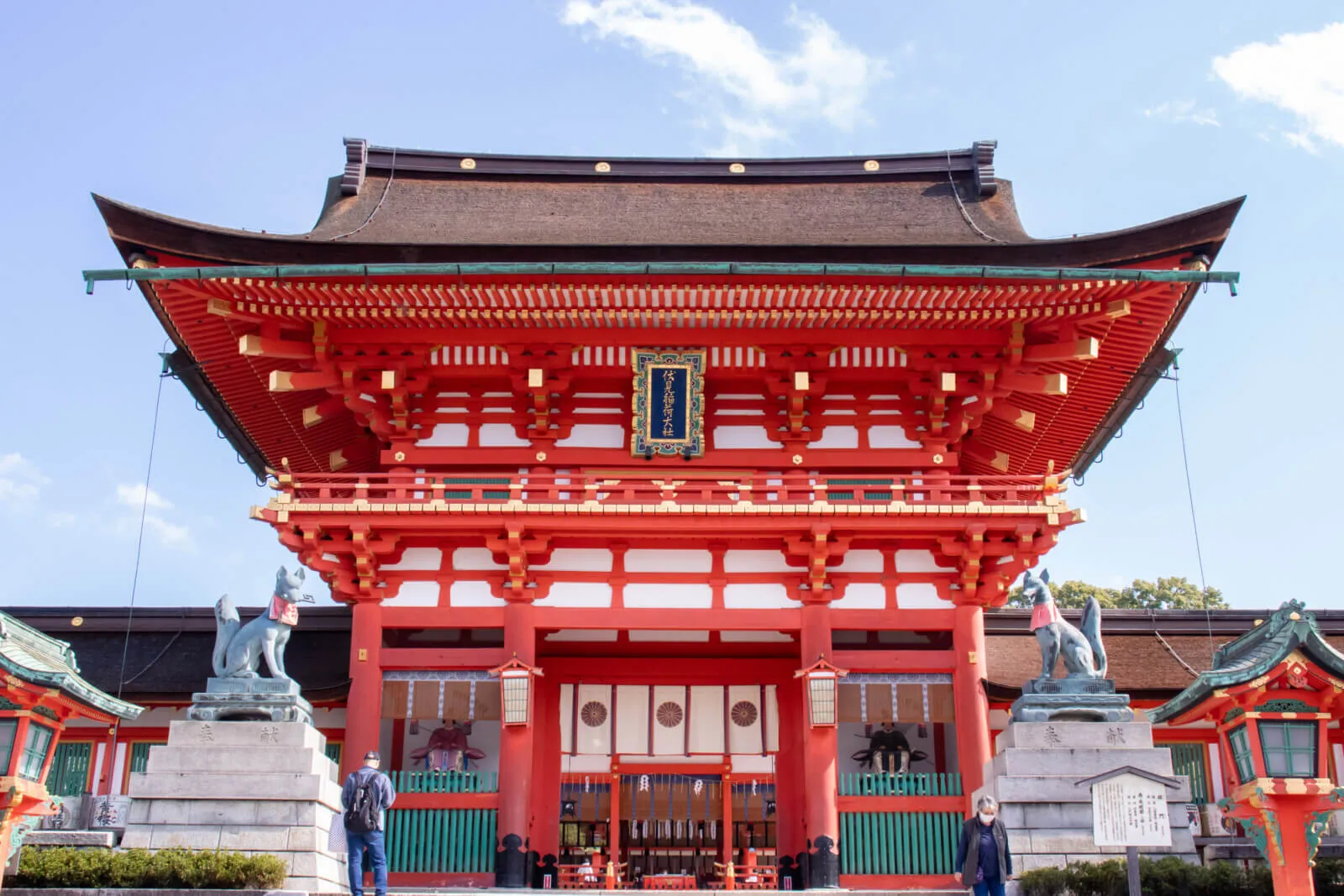
- Shrines feature the “Torii Gate” A simple gate with two upright posts and a crossbar. This serves as the boundary between the mundane world and the sacred realm of the gods. Vermilion (bright red-orange) gates are common as they are believed to ward off evil.
- Temples feature the “Sanmon Gate” and Incense Temples have heavy, roofed gates called Sanmon. You will often see “Nio Guardians”—muscular, fierce-looking statues—protecting the entrance. If you see a large incense burner (Jokoro) where people are fanning smoke onto themselves, it is a temple.
3. What is Inside? The Objects of Worship
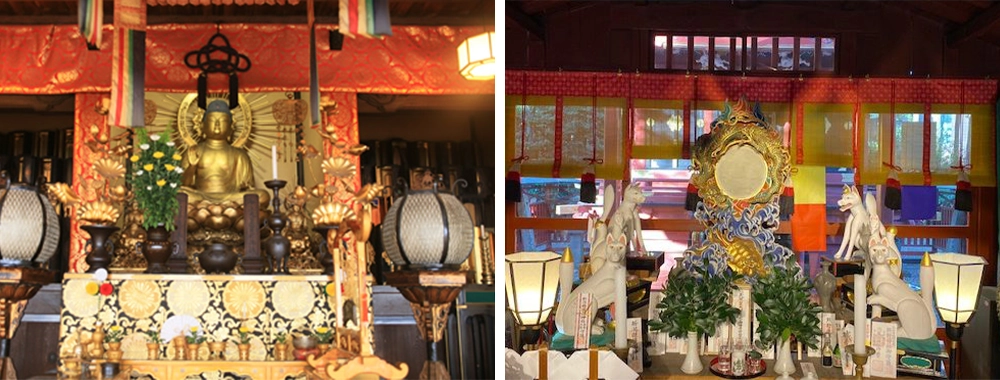
- Temples: Buddha Statues Inside the main hall, you will find golden, ornate statues of Buddha. These are objects of salvation that visitors can often see directly.
- Shrines: Sacred Objects (Goshintai) Shrines do not have statues. Instead, a “Sacred Object” such as a mirror, sword, or even an ancient tree represents the deity. Because the gods are considered too sacred for human eyes, these objects are hidden in the innermost sanctuary and are never seen by the public.
4. The Essential Ritual: Purification at the Temizuya
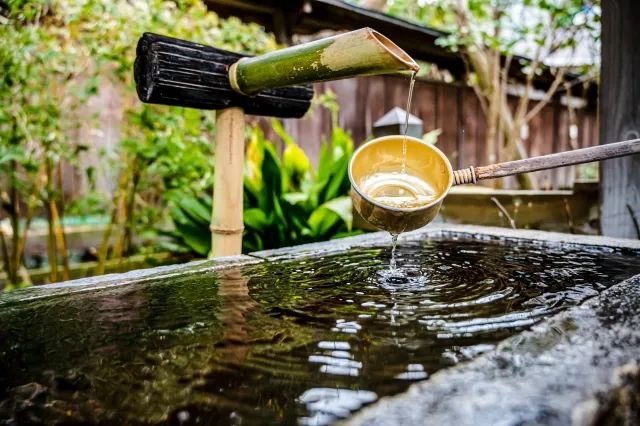
Before praying at either a temple or a shrine, you must purify your body at the water pavilion called Temizuya.
- Hold the ladle with your right hand and wash your left hand.
- Switch the ladle to your left hand and wash your right hand.
- Switch back to your right hand, pour some water into your left palm, and rinse your mouth (Do not touch the ladle directly to your mouth).
- Wash your left hand once more and finally tilt the ladle upright to wash the handle with the remaining water.
5. Prayer Etiquette: The “Clapping” Difference
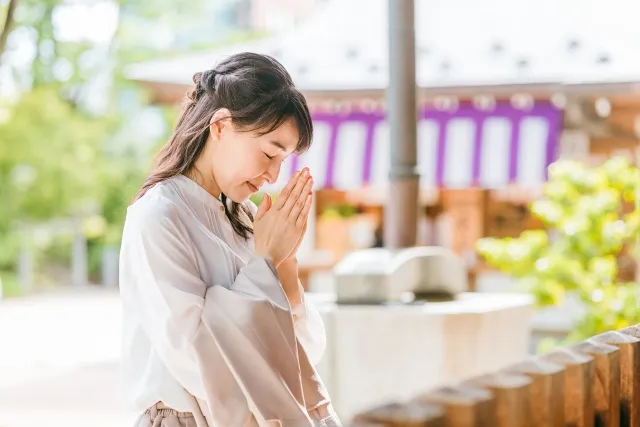
The biggest difference is whether or not you clap your hands.
- At Temples: Be Silent and Still Place your coin in the box quietly. Join your palms together in front of your chest (this is called Gassho). Close your eyes and pray silently. Never clap your hands at a temple.
- At Shrines: Call the Gods with a Sound The standard ritual is “2 bows, 2 claps, 1 bow.” After offering a coin, bow deeply twice. Then, clap your hands twice at chest level. This sound lets the gods know you are there. Pray with your hands joined, and finish with one final deep bow.
6. Photography, Dress Code, and Offerings
- Photography: Taking photos of the exterior is usually fine, but photography inside the buildings (near the altars) is strictly prohibited.
- Dress Code: There is no strict dress code, but avoid overly revealing clothing. Since you may need to remove your shoes to enter temple halls, wearing clean socks is highly recommended.
- Offerings: The 5-yen coin (Go-en) is considered the luckiest offering because its name sounds like the Japanese word for “Good Connection.”
7. Iconic Examples in Japan
Here are some must-visit spots to see these differences in person:
【Tokyo】
- Shrine: Meiji Jingu Shrine A massive shrine surrounded by a lush forest, dedicated to Emperor Meiji.
Address:1-1 Yoyogikamizonochō, Shibuya City, Tokyo
Official Site:https://www.meijijingu.or.jp/en/ - Temple: Senso-ji Temple Tokyo’s oldest temple, famous for the “Kaminarimon” gate and the lively Nakamise shopping street.
Address:2-3-1 Asakusa, Taito City, Tokyo
Official Site:https://www.senso-ji.jp/english/
【Osaka】
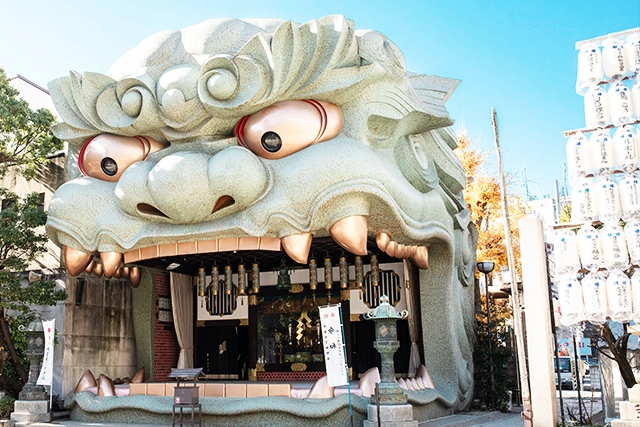
- Shrine: Namba Yasaka Shrine Famous for its massive lion-head stage, this is a popular spot for photos and warding off bad luck.
Address:2-9-19 Motomachi, Naniwa Ward, Osaka
Official Site:https://nambayasaka.jp/
【Kyoto】
- Temple: Kiyomizu-dera Temple A UNESCO World Heritage site famous for its massive wooden stage built without a single nail.
Address:1-294 Kiyomizu, Higashiyama Ward, Kyoto
Official Site:https://www.kiyomizudera.or.jp/en/
8. Glossary: Words to Remember
- Torii: The entrance gate of a shrine.
- Sanmon: The main entrance gate of a temple.
- Goshuin: A handwritten stamp and calligraphy as proof of your visit.
- Temizuya: The water pavilion for purification.
- Omikuji: A paper fortune slip.
- Ema: Wooden plaques where you write your wishes.
Conclusion: Enjoy the Harmony of Japan
In Japan, it is common to pray at a shrine for health in the New Year and hold a funeral at a temple. This spirit of “Coexistence” between two different religions is a core part of Japanese culture. On your next trip, pay attention to the gates and the rituals—you’ll gain a much deeper appreciation for the sacred heart of Japan!