This guide is designed for international visitors experiencing Japanese shrine culture for the first time. Based on an actual visit, it clearly explains the history, highlights, and cultural background of Asakusa Shrine.
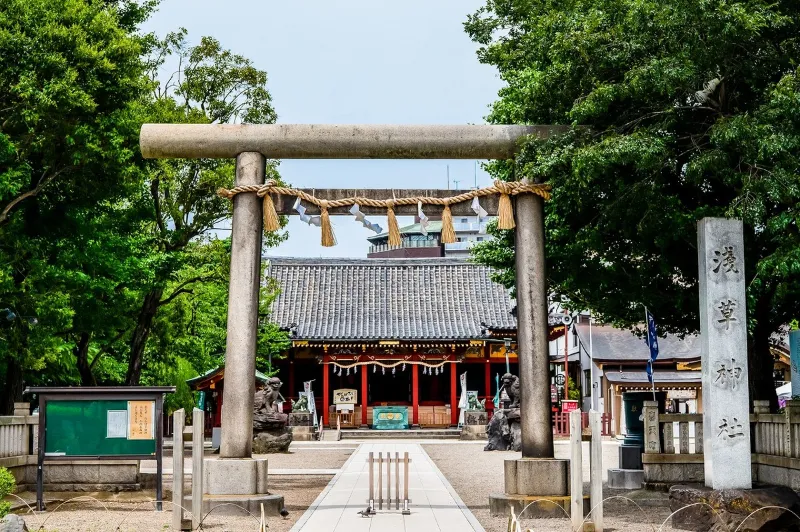
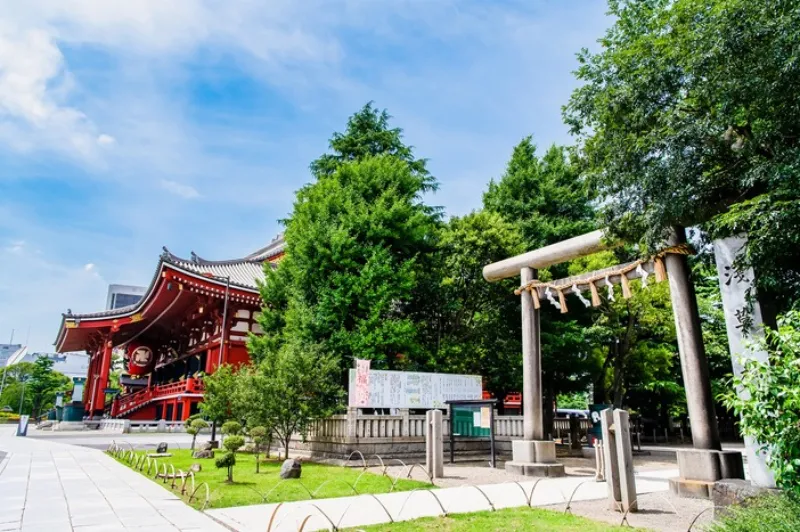
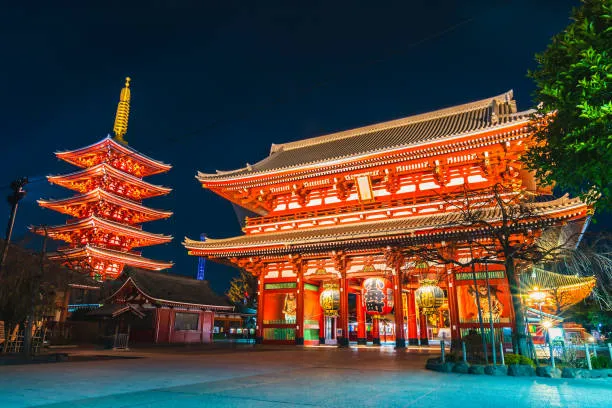
Asakusa Shrine is located just east of the main hall of Senso-ji Temple, beyond a large stone torii gate. It is known as “Sanja-sama” and serves as the guardian shrine of the Asakusa area. If you are planning to explore Senso-ji in detail, be sure to check out our complete guide here:
Despite being right next to the famous Senso-ji Temple and its iconic Kaminarimon Gate, the atmosphere here is surprisingly calm and quiet. In contrast to the busy tourist crowds, the shrine offers a peaceful and reflective environment.
When you actually visit, you’ll notice how quickly the atmosphere changes—just a few minutes away from the bustling temple, it feels less like a tourist attraction and more like a genuine place of worship.
The origin of Asakusa Shrine dates back to the year 628. According to legend, two fishermen brothers, Hinokuma Hamanari and Takenari, discovered a statue of Kannon (the Goddess of Mercy) in the Sumida River. A local intellectual, Hajino Nakatomo, recognized its significance and enshrined it—this event led to the founding of Senso-ji Temple.
What makes Asakusa Shrine unique is that it enshrines these three real historical figures as deities. While the main image of Senso-ji is a “hidden Buddha” (never shown to the public), Asakusa Shrine honors the people behind its discovery. This is a rare and distinctive form of belief in Japan.
Because of these three enshrined figures, the shrine is called “Sanja-sama” (Three Deities), and its major festival is known as “Sanja Matsuri.”
The shrine’s origins trace back to “Sanja Gongen-sha,” established between the late Heian and early Kamakura periods. The current shrine buildings were constructed in 1649 by Tokugawa Iemitsu. Built in the Gongen-zukuri architectural style, the complex connects the main hall, offering hall, and worship hall with corridors. Remarkably, it survived wars and disasters, and was designated as an Important Cultural Property of Japan in 1951.
Until the Meiji period, the shrine and Senso-ji Temple were part of the same religious complex, known as “Sanja Myojinsha.” Due to the government’s policy separating Shinto and Buddhism, it was later renamed Asakusa Shrine. This shared history shows how deeply connected the shrine and temple still are.
Additionally, Asakusa Shrine is one of the Asakusa Seven Lucky Gods pilgrimage sites, and Ebisu, the god of prosperity, is enshrined here.
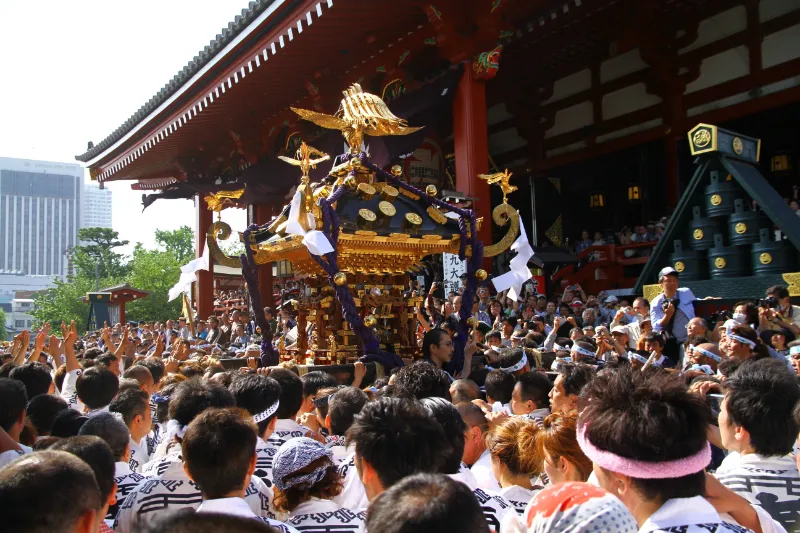
The most famous event at Asakusa Shrine is Sanja Matsuri, held every May. It is one of Japan’s most important festivals and a signature early-summer event in Tokyo, attracting around 1.8 million visitors each year.
The festival honors the three enshrined deities. Participants from different neighborhoods wear unique traditional coats (hanten), reflecting local identity and pride.
Highlights include the grand parade with traditional performers, the “Binzasara Mai” (a designated intangible cultural property), and the powerful mikoshi (portable shrine) procession through the streets of Asakusa.
Experiencing it in person is incredibly powerful—the energy, chants, and movement of the crowd create an atmosphere that cannot be fully captured on video.
Nagoshi no Oharae (June Purification Ritual)
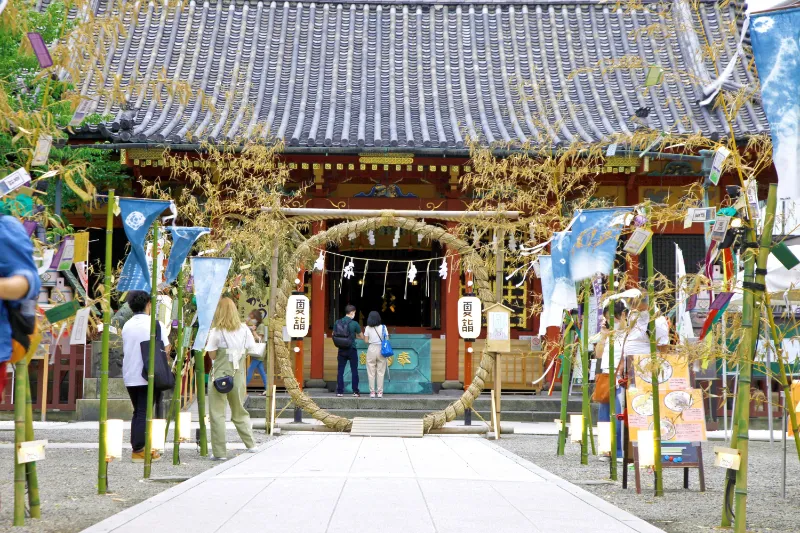
In June, a traditional purification ritual called “Nagoshi no Oharae” is held. A large ring made of grass (Chinowa) is set up, and visitors walk through it in a figure-eight pattern three times.
This ritual is believed to cleanse impurities, prevent illness, and bring good fortune. Watching or participating offers a unique opportunity to experience traditional Japanese spiritual practices.
Shrine Buildings (Important Cultural Property)
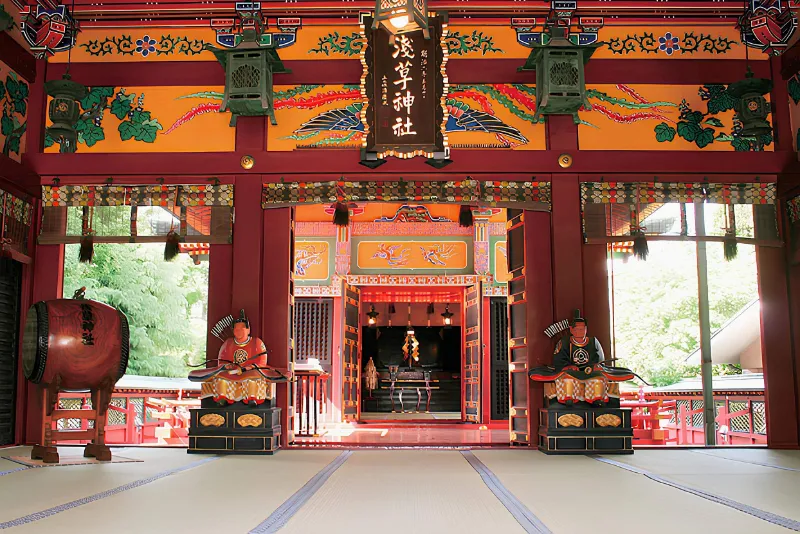
The current shrine structures were built in 1649 by Tokugawa Iemitsu. They follow the Gongen-zukuri architectural style, connecting multiple halls with covered corridors.
What makes them especially significant is that they have survived fires, wars, and earthquakes, preserving their original Edo-period appearance. Seeing them up close reveals intricate craftsmanship and historical detail.
Married Guardian Lions (Meoto Komainu)
At the entrance, you’ll find a pair of guardian lion statues standing closely together. Known as “Meoto Komainu,” they symbolize harmony and good relationships.
They are believed to bring blessings for marriage and relationships, and are also a popular photo spot.
Statue of Kankichi Ryotsu
Within the shrine grounds, there is a statue of Kankichi Ryotsu, the main character from the famous manga “Kochikame.”
This blend of traditional religious space and modern pop culture is a uniquely Japanese feature that adds a fun and unexpected element to the visit.
Mythical Creatures & Decorations
The shrine buildings are decorated with various mythical creatures, many of which symbolize peace and good fortune.
For example, the “Hiryu” (flying dragon) has the body of a fish and wings, and is associated with water and protection. The “Kirin” is a sacred creature in Chinese mythology, said to appear during the reign of a wise ruler. It has the body of a deer, head of a wolf, tail of a cow, legs of a horse, and horns.
Looking closely at these details adds a deeper layer of appreciation to the architecture.
Omamori (Amulets)
Next to the shrine buildings, you can purchase various amulets. Many include English explanations and illustrations, making them easy for international visitors to understand.
One of the most popular is the “Daijobu” (It’s okay / You’ll be fine) amulet, which carries a simple but powerful message and is often chosen as a souvenir.
Blessings at Asakusa Shrine
Asakusa Shrine is believed to offer a wide range of blessings:
Family happiness
Traffic safety
Business success
Protection from illness
Good health
Success in exams
It is also known for “wish fulfillment,” meaning heartfelt wishes are believed to come true.
When visiting, you’ll notice that many people come not just for sightseeing, but to genuinely pray—showing that this is still an active place of faith.
Hidden Insights & Cultural Notes
There are several unique aspects of Asakusa Shrine that many visitors don’t immediately notice:
While Senso-ji enshrines a hidden Buddha, Asakusa Shrine enshrines the people behind its origin
Sanja Matsuri honors the spirits of these three individuals
The shrine buildings are rare surviving examples of early Edo-period architecture
Before the Meiji era, it was part of Senso-ji and known as “Sanja Myojinsha”
Walking through the grounds, you’ll feel a striking contrast—right next to the busy temple, yet calm and timeless. It reveals a deeper, quieter side of Asakusa.
Asakusa Shrine is more than just a neighboring site to Senso-ji—it is the foundation of its history. With its unique belief system that enshrines real people, its preserved Edo-period architecture, and vibrant traditions like Sanja Matsuri, it offers a rich and authentic cultural experience.
Visiting in person allows you to feel that this is not just a tourist destination, but a living place of faith where Japanese culture continues today.
To fully understand the history and significance of this area, we highly recommend visiting Senso-ji together with Asakusa Shrine. You can explore our complete Senso-ji guide here:
Experiencing both sites will give you a deeper and more meaningful understanding of Asakusa and its cultural roots.