This guide is designed for first-time visitors to Japanese temple culture, especially international travelers, and explains everything clearly based on real visit experiences.
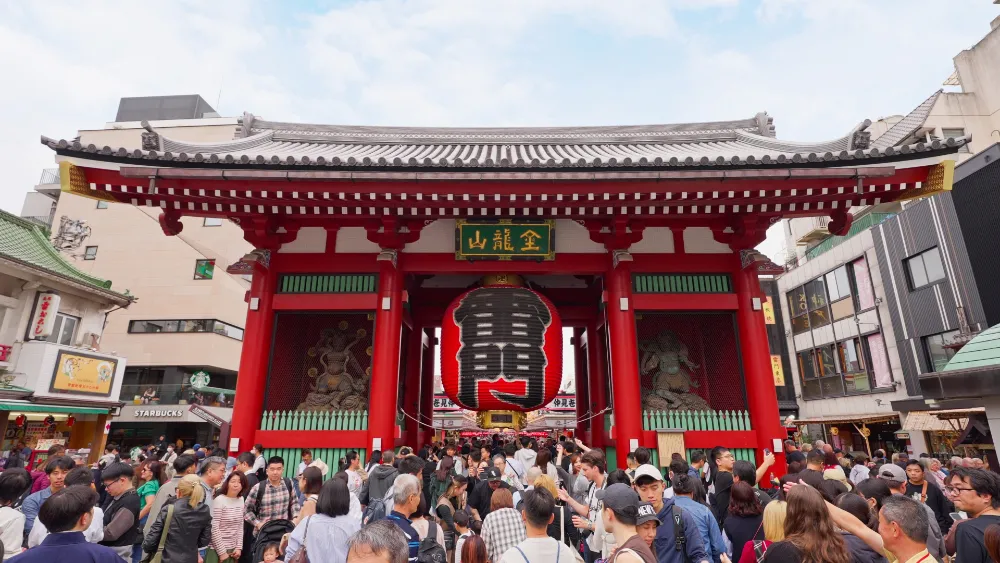
Senso-ji Temple in Asakusa is one of the oldest and most historically significant temples in Tokyo, attracting worshippers for centuries. One of the first things visitors notice is the iconic Kaminarimon Gate, famous for its massive red lantern, which has become a symbol of Asakusa and one of Tokyo’s most recognizable landmarks.
Beyond the gate lies Nakamise Street, a traditional shopping street leading up to the temple. It is lined with shops selling Japanese sweets, souvenirs, and cultural items. Enjoying street food and traditional snacks while walking through this area is one of the unique experiences of visiting Asakusa.
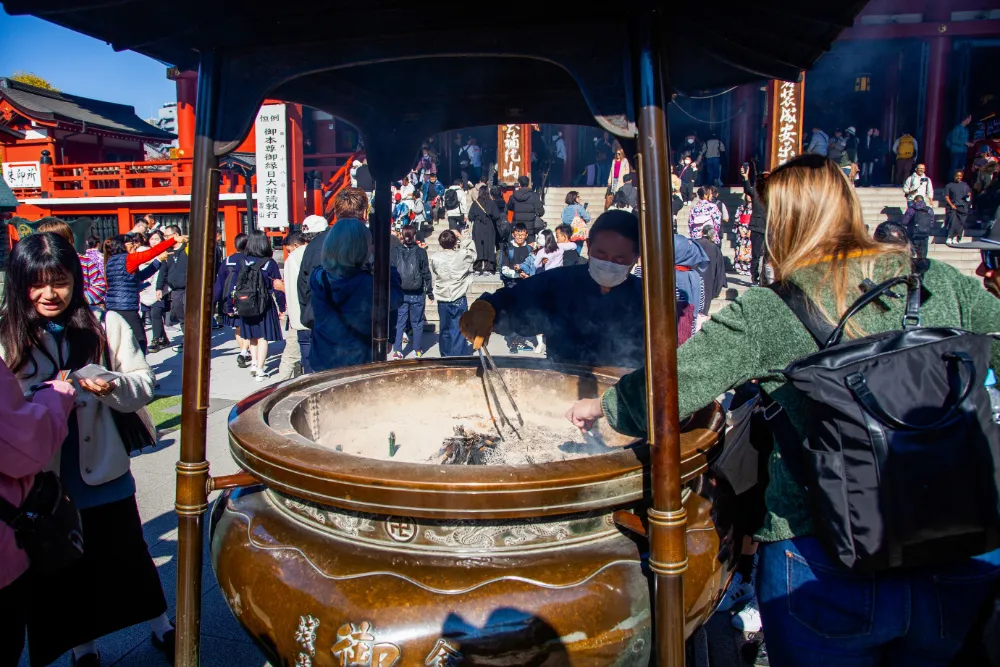
Near the main hall, it is common to see visitors wafting incense smoke from a large burner over their bodies, as it is believed to promote good health. The main hall enshrines Kannon (the Goddess of Mercy), who is worshipped as a compassionate figure that answers various wishes. Within the temple grounds, visitors can also purchase amulets and talismans, attracting both domestic and international travelers.
When you actually visit Senso-ji, it feels less like a tourist attraction and more like a “living temple” where spiritual practices are still very much alive.
Basic Information & Access
Address: 2-3-1 Asakusa, Taito City, Tokyo 111-0032, Japan
Access
From Asakusa Station From Asakusa Station, take Exit A4 (Toei Subway) or Exits 1–3 (Tokyo Metro). It’s about a 5-minute walk to Senso-ji Temple.
From Tokyo / Ueno From Tokyo Station, take the JR Yamanote Line to Ueno Station, then transfer to the Tokyo Metro Ginza Line. Senso-ji (Asakusa Station) is 3 stops away, about 5 minutes.
From Haneda Airport Take the Keikyu Airport Line (Rapid Limited Express bound for Narita Airport). You can reach Asakusa Station directly without transfers in about 40 minutes.
From Narita Airport Take the Keisei Line (Access Express). You can reach Asakusa Station directly in about 60 minutes.
From Tokyo Skytree Tokyo Skytree From Tokyo Skytree, take the Toei Asakusa Line from Oshiage Station to Asakusa Station (about 3 minutes). Alternatively, take a bus (about 15 minutes). Walking takes approximately 20–30 minutes.
Top Things to Do at Senso-ji (Asakusa)
Kaminarimon Gate
Kaminarimon Gate
Kaminarimon is the main entrance to Senso-ji and one of the most famous landmarks in Asakusa. The giant lantern hanging at the front creates an impressive sight and is a popular photo spot for visitors.
However, there is more to see than just the lantern. Underneath it, you’ll find detailed dragon carvings with intricate craftsmanship. On both sides of the gate stand statues of Raijin (Thunder God) and Fujin (Wind God), protecting the temple with powerful expressions.
Behind the gate, you can also find statues of a golden dragon and a heavenly dragon. Exploring both the front and back of the gate allows you to fully appreciate its details.
In reality, many visitors only look at the front and move on, but taking time to explore the back significantly enhances the experience.
Hozomon Gate
Hozomon Gate
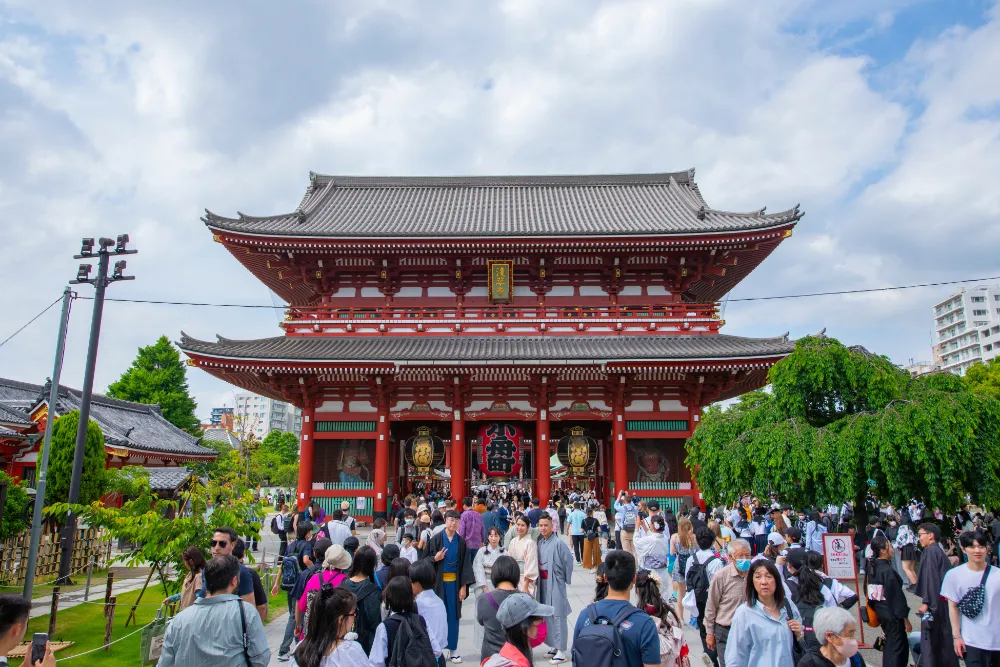
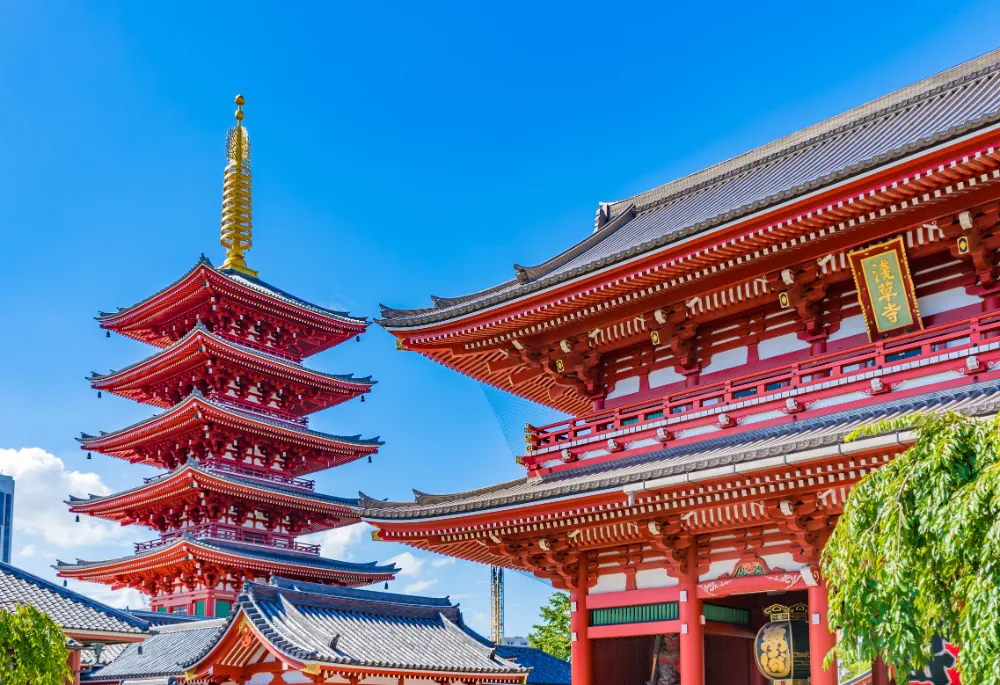
Hozomon is a large, two-story gate located on the way to the main hall. Like Kaminarimon, it also features a large lantern, but with a different kind of imposing presence.
On both sides of the gate stand powerful guardian statues known as Nio. One has an open mouth (Agyo), and the other has a closed mouth (Ungyo), symbolizing protection.
Behind the gate, you will find enormous straw sandals displayed as offerings. These symbolize protection against evil and represent strong spiritual guardianship.
In fact, relatively few visitors walk around to the back, making these giant sandals a hidden highlight.
Jokoro (Incense Burner)
Jokoro (Incense Burner)
The Jokoro is a large incense burner located in front of the main hall and is one of the most visited spots in Senso-ji. Visitors light incense and bathe in the smoke to purify themselves.
It is believed that directing the smoke toward parts of your body can improve health, so you’ll often see people wafting it toward their heads or shoulders.
The incense burner itself is beautifully designed, reflecting traditional craftsmanship. It is not just a functional object but also a cultural and spiritual symbol.
For first-time international visitors, this can be a surprising yet memorable cultural experience.
Five-story Pagoda
Five-story Pagoda
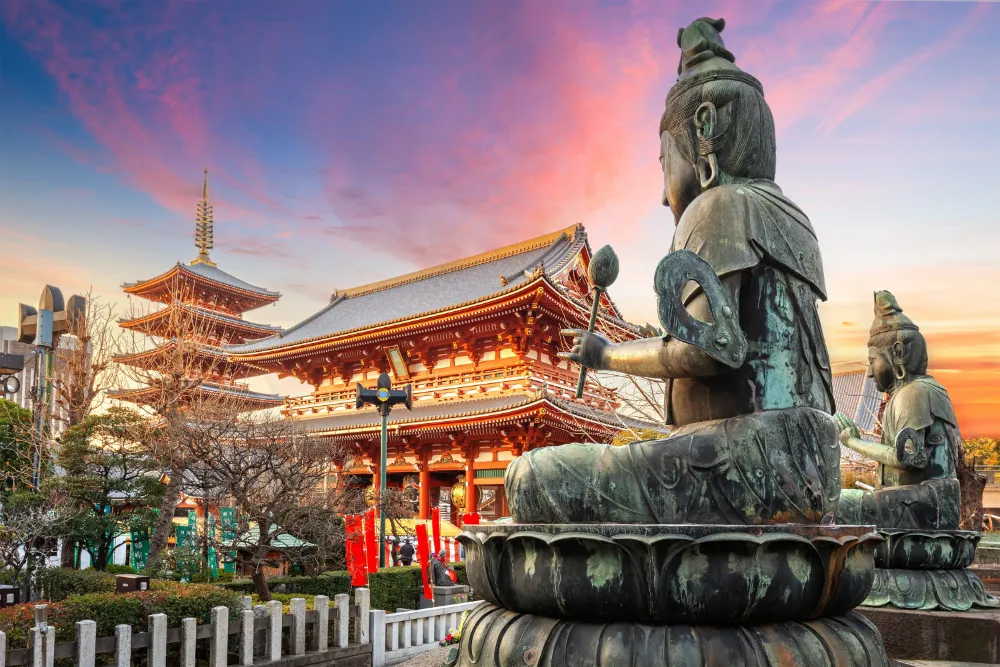
The Five-story Pagoda at Senso-ji stands out prominently within the temple grounds and represents traditional Japanese Buddhist architecture. It rises over 50 meters high and is visible from a distance.
This structure is not merely decorative—it has deep religious significance. Sacred Buddhist relics are enshrined at the top, making it an important object of worship.
Viewing it up close allows you to fully appreciate its scale and intricate details.
Main Hall (Kannon Hall)
Main Hall (Kannon Hall)
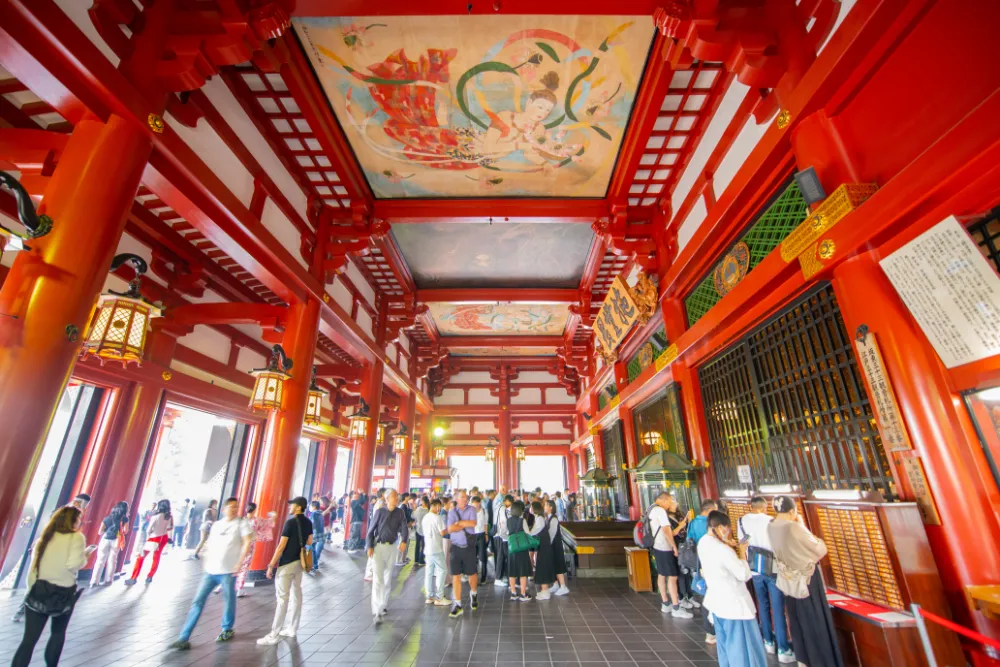
The main hall is the central building of Senso-ji and attracts the largest number of visitors. It is also called Kannon Hall because it enshrines Kannon, the Goddess of Mercy.
A large lantern hangs at the front, creating a striking visual impression. Inside, you’ll find magnificent ceiling paintings, including a dragon in the center and heavenly beings on both sides.
Photography is not allowed, making it a special experience that can only be appreciated in person. The hall is believed to grant a wide range of wishes, not limited to any specific area.
When you step inside, you can feel a solemn and sacred atmosphere that cannot be experienced from outside.
Highlight Inside the Main Hall: Golden Shrine & Enshrined Deities
Inside the main hall, one of the most remarkable features is the golden inner shrine.
This sacred structure houses the temple’s principal image, Kannon, and can be seen as a “temple within a temple.” It is decorated with intricate wooden carvings covered in gold leaf, creating a luxurious and highly detailed appearance.
Even from a distance, its brilliance stands out, giving the space an especially sacred atmosphere.
By observing closely, you can also appreciate the high level of traditional Japanese craftsmanship.
Senso-ji Etiquette Guide | Essential Tips for First-Time Visitors
When visiting Senso-ji, it’s important to note that temple etiquette differs from that of shrines. While the rules are simple, understanding the flow helps you have a more respectful experience.
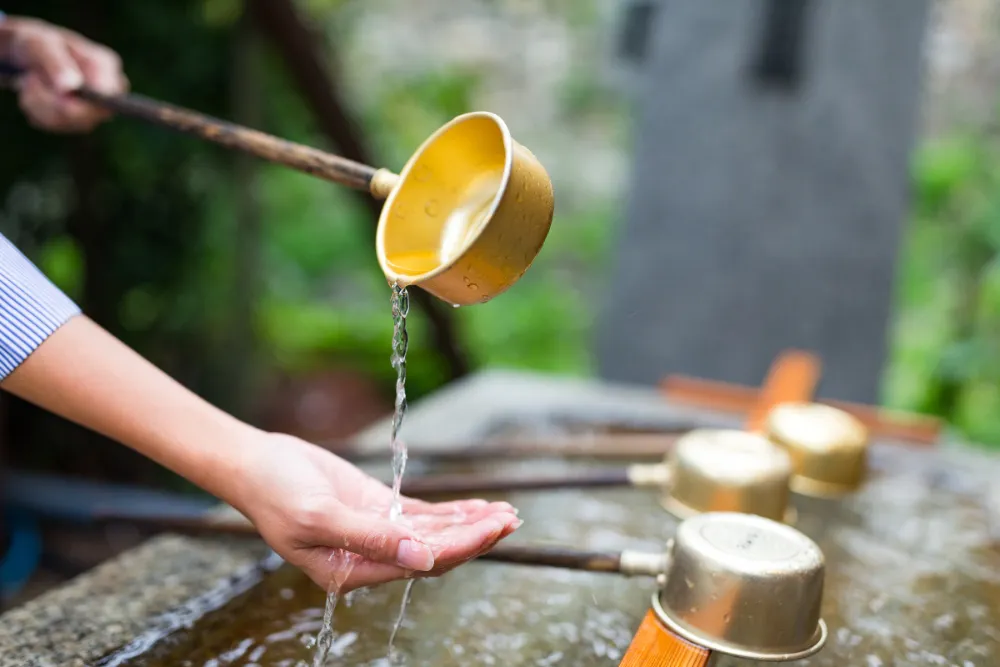
First, bow lightly at Kaminarimon before entering. Walk along the approach and stop at the purification fountain to cleanse your hands and mouth.
Next, proceed to the incense burner and purify yourself with the smoke. Many visitors also offer incense. Finally, approach the main hall, quietly put your hands together, and pray.
Even if it’s your first time, following the flow will help you naturally complete the visit.
How to Purify at the Water Pavilion
How to Worship01
Cleansing your hands and mouth symbolizes purification before prayer.
Steps:
Hold the ladle in your right hand and wash your left hand
Switch hands and wash your right hand
Hold it again in your right hand, pour water into your left hand, and rinse your mouth (do not touch the ladle to your mouth)
Finally, rinse the handle and return it
Perform each step calmly and respectfully.
At first, it may feel unfamiliar, but simply observing others will help guide you.
How to Pray at the Main Hall
How to Worship02
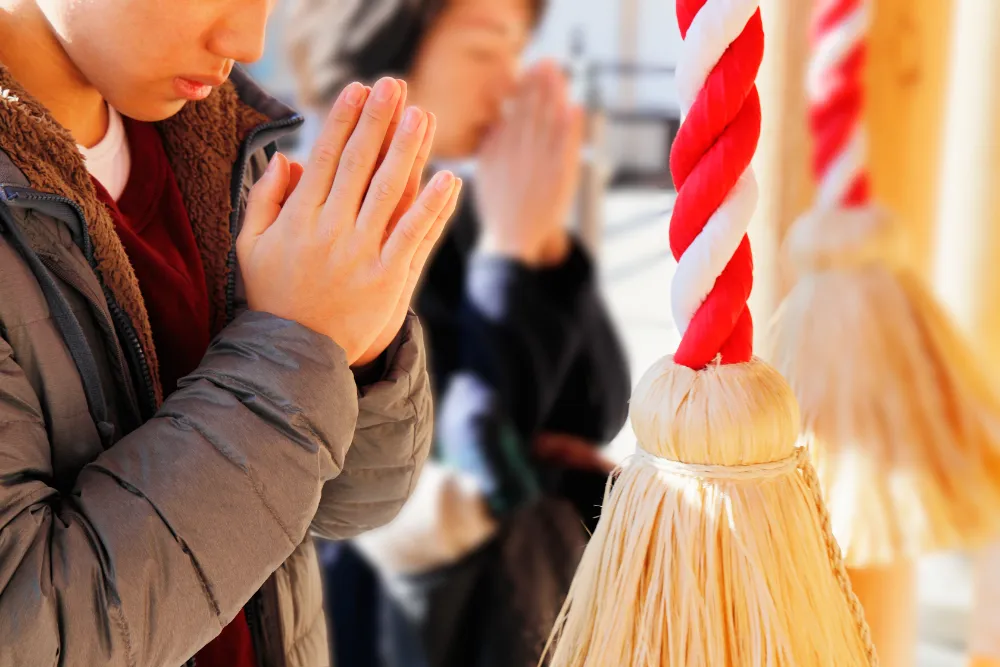
At the main hall, take a moment to compose yourself before praying.
Place an offering
Put your hands together and pray
Finish with a slight bow
Unlike shrines, you do not clap your hands. Maintaining a calm and respectful posture is key.
The process is simple, making it easy for international visitors to follow.
Hidden Side of Senso-ji | Secret Spots Most Tourists Miss
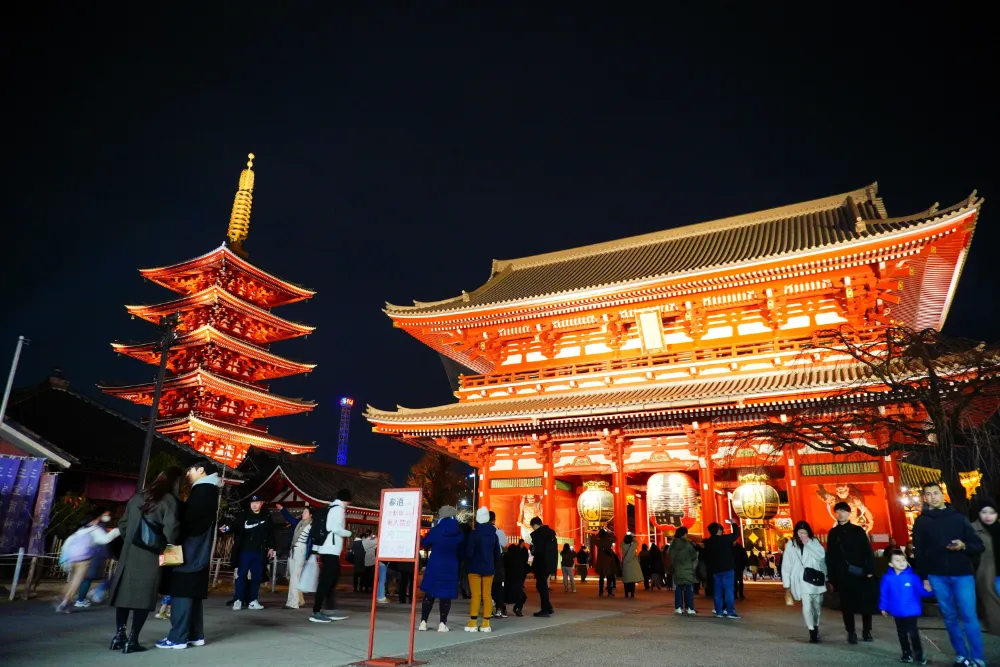
Senso-ji at Night (Illumination)
Senso-ji at Night
Senso-ji becomes a completely different place at night, offering a “hidden experience” that many visitors don’t know about. As the crowds fade after sunset, the temple grounds become शांत and peaceful.
The illumination continues until around 11 PM, lighting up Kaminarimon, Hozomon, the pagoda, and the main hall with a soft glow.
Places that are crowded during the day become quiet, allowing you to explore at your own pace. You can also take photos without waiting, making it a more relaxed and premium experience.
Nakamise Street transforms as well—when the shops close, painted shutters appear, revealing artwork that can only be seen at night.
With fewer visitors, this time becomes a true hidden gem, offering a more immersive and memorable experience of Senso-ji.
Visiting at night allows you to experience a completely different kind of beauty and tranquility.
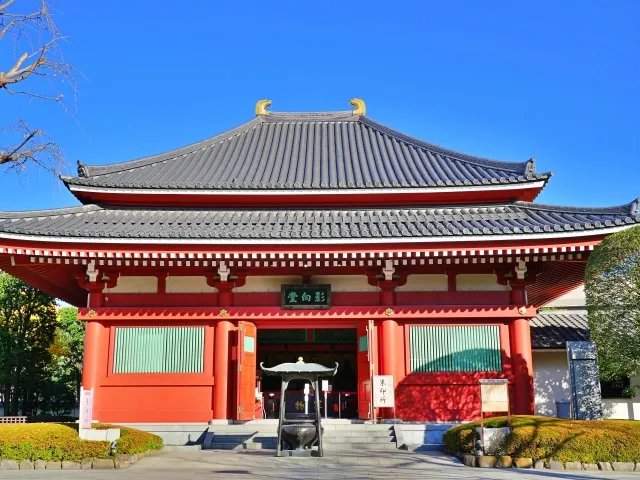
Yogodo Hall
Yogodo Hall
Yogodo Hall is located slightly behind the main hall and was built in 1994. Although not widely known among tourists, it is one of the most meaningful places within Senso-ji.
Its unique feature is that it enshrines guardian Buddhas associated with each zodiac year. In Japanese tradition, each person is believed to have a guardian deity based on their birth year, and visitors can pray to their corresponding deity here.
At the center is Kannon, surrounded by various other Buddhist figures, allowing visitors to pray to multiple deities in one place.
The hall also enshrines Daikokuten, associated with wealth and business success, and it is a place where you can receive goshuin (temple stamps) as proof of your visit.
Compared to the busy main hall area, Yogodo offers a calm and quiet atmosphere.
Visiting here provides a unique opportunity to experience Japanese spiritual culture more deeply.
Behind the Main Hall
While the front of the main hall is always crowded, the back area offers a completely different atmosphere. The crowds disappear, and a quiet, peaceful environment takes over.
This area feels less like a tourist spot and more like an authentic place of worship, where daily faith continues.
Simply walking here can change your entire impression of Senso-ji.
In reality, it is surprisingly uncrowded, making it a perfect hidden spot for a relaxed stroll.
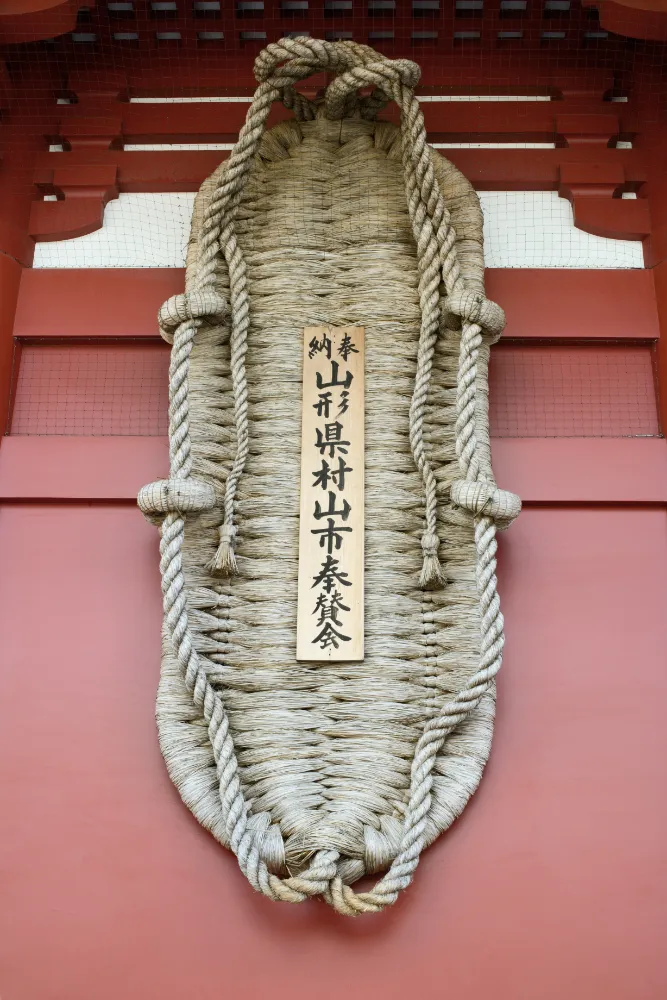
Giant Sandals Behind Hozomon
Giant Sandals Behind Hozomon
Many visitors only view Hozomon from the front, but behind it, you’ll find enormous straw sandals displayed as offerings.
Their size is far beyond expectations, and seeing them in person leaves a strong impression.
These sandals symbolize protection from evil and are an important part of the temple’s cultural identity.
It’s a hidden highlight that is easy to miss.
Intricate Carvings Around the Main Hall
From a distance, the main hall appears as a large structure, but up close, you’ll notice incredibly detailed carvings.
Look closely at the pillars, foundations, and roof areas to discover dragons and other intricate designs that showcase the high level of Japanese craftsmanship.
Many visitors overlook these details, but changing your perspective reveals a completely new layer of appreciation.
Taking time to observe allows you to enjoy the architecture more deeply.
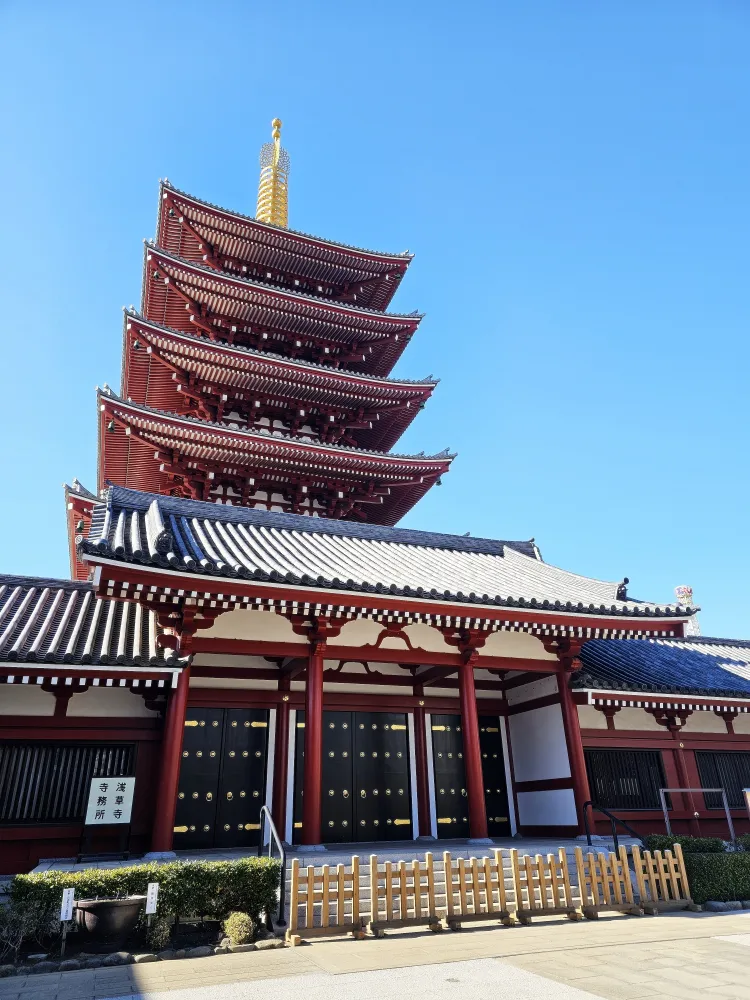
Base of the Five-story Pagoda
Five-story Pagoda01
While most people focus on the height of the pagoda, the base also offers unique perspectives.
Looking up from below highlights the layered structure and fine details in a way that cannot be appreciated from afar.
The area is usually less crowded, making it easier to take your time.
Viewing it from close range gives a stronger sense of depth and beauty.
Other Deities Beyond Kannon
Senso-ji is not only dedicated to Kannon but also enshrines various other Buddhist figures and protective deities. Walking through the grounds, you will find small statues and halls, each with its own meaning.
One of the most unique is the “Nadebotoke” statue. Visitors touch the part of the statue corresponding to their own physical ailments and then touch their body, believing it will help healing. The surface of the statue has become smooth from constant contact.
There are also dragon deities associated with water and rain, reflecting prayers connected to nature.
The coexistence of these diverse beliefs is one of the defining characteristics of Senso-ji.
As you explore, small discoveries accumulate, making the experience richer and more meaningful.