Tokyo’s reputation as a world-class culinary capital goes far beyond its record-breaking number of Michelin stars. The true appeal lies in the fact that each district offers a distinct culinary philosophy and atmosphere.
Even with familiar dishes like sushi or Japanese Wagyu, your experience will change dramatically depending on the neighborhood you choose. This guide explains three iconic gastronomy districts to help you select the best area for your personal style and schedule.
1. Tsukiji and Toyosu: The Hubs of Japanese Seafood
While Tsukiji and Toyosu are both essential to Tokyo’s seafood culture, they offer contrasting experiences. Your choice should depend on the type of atmosphere you prefer.
Tsukiji: Energetic and Casual Street Food
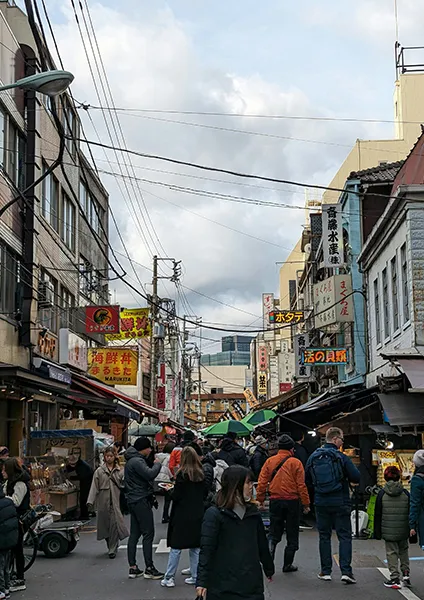
The Tsukiji Outer Market (Tsukiji Jogai) is the best place to feel the traditional, bustling energy of old Tokyo. The streets are lively and filled with the aromas of fresh grilling. From morning to early afternoon, you can enjoy “Tabearuki” (walking and eating) with items like grilled tuna skewers or Tamagoyaki (sweet rolled omelets). The area is packed with casual restaurants serving Kaisen-don (seafood bowls) using ingredients sourced directly from the market. It is an excellent choice for travelers who want to combine sightseeing with a quick, high-quality meal.
Toyosu: Sophisticated and Modern Market Experience
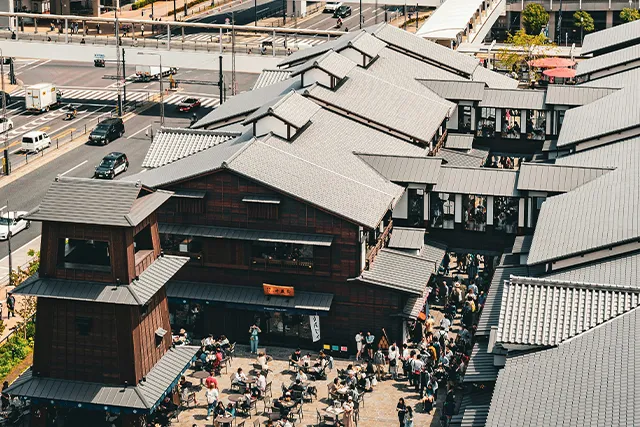
Toyosu is the current center of Tokyo’s wholesale operations. Unlike the rustic streets of Tsukiji, Toyosu is a modern, climate-controlled, and highly organized facility. The spacious layout makes it a stress-free environment for international travelers who prefer a clean and safe market experience. Rather than the grit of local street life, Toyosu offers a “systematic” way to enjoy food, often paired with a visit to the market observation decks. It is a refined way to experience Japan’s seafood logistics alongside a high-end lunch.
Best for travelers who:
Want a classic seafood experience in a short amount of time.
Enjoy street food and casual lunch atmospheres.
Value cleanliness, safety, and ease of navigation for their first trip to Tokyo.
2. Shinbashi and Yurakucho: Authentic Local Izakaya Culture
Shinbashi and Yurakucho offer a glimpse into the daily lives of Tokyo’s workforce, staying far away from the typical “tourist trap” atmosphere. As evening approaches, the streets fill with locals finishing their workday, revealing the true face of Tokyo’s nightlife.
District Feature: Dining Under the Train Tracks
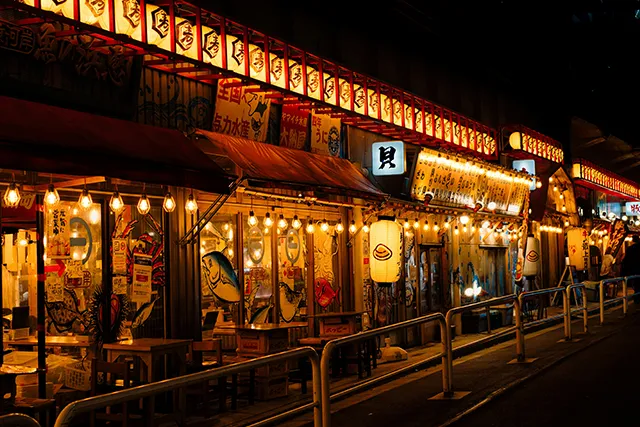
Along the JR railway lines, in areas known as “Gado-shita” (literally “under the girders”), you will find rows of famous Yakitori (grilled chicken skewers) and charcoal-grill restaurants. These spots are welcoming even for solo travelers and offer an unpretentious environment where you can blend into the local social scene.
Food Style: High-Quality Local Comfort Food
The grilled meats here, such as Yakitori and Motsuyaki (grilled offal), are simple yet technically perfected. These shops have been loved by locals for decades because they focus on flavor over flashy presentation. It is an area where you are likely to find “hidden gems” that people visit purely for the quality of the food.
Best for travelers who:
Prefer an authentic local atmosphere over tourist-oriented venues.
Want high-quality food in a relaxed, casual setting.
Enjoy “bar-hopping” through lively, atmospheric alleys.
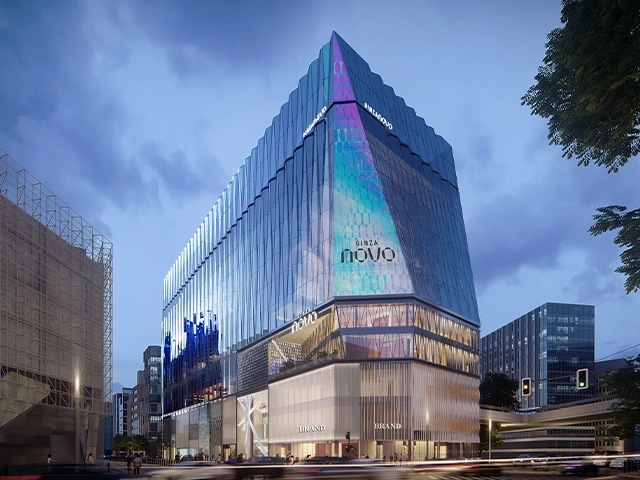
3. Ginza: The Peak of Fine Dining and Hospitality
Ginza is more than just a luxury shopping district; it is an area where the meal itself is designed as a complete sensory experience, integrating food, interior design, and service.
The Dining Style: “Omakase” (Chef’s Choice)
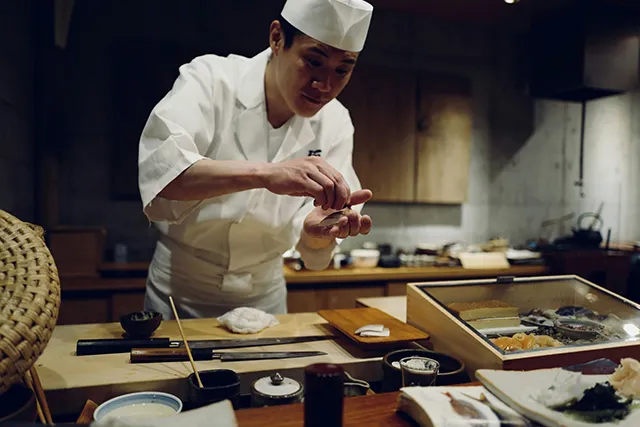
In Ginza, the “Omakase” style is the standard for high-end dining. Whether it is Sushi, Kaiseki (traditional multi-course haute cuisine), or French-Japanese fusion, guests typically leave the selection of ingredients and the flow of the meal to the chef. By entrusting your meal to these artisans, you experience the pinnacle of Japanese hospitality, known as Omotenashi.
Travel Tip: Sophisticated Lunch Options
While dinner in Ginza often falls into a high price bracket (typically starting from 20,000 to 30,000 JPY), many of the same world-class restaurants offer lunch sets that showcase the same philosophy at a more accessible price point. While Ginza is an upscale adult district, the dress codes are generally reasonable, making it a comfortable yet special destination for a refined meal.
Best for travelers who:
Are looking for a highlight meal for an anniversary or special occasion.
Prefer a quiet, elegant environment with highly refined service.
Want to experience the peak of Japanese aesthetic and culinary precision.
Summary: Which Tokyo Food Experience is for You?
For casual seafood and market energy → Tsukiji or Toyosu
For authentic local nightlife and charcoal grills → Shinbashi or Yurakucho
For the ultimate fine dining experience → Ginza
In Tokyo, choosing the right district is just as important as choosing the restaurant. Select the area that best matches your travel goals and your mood for the day to discover the true depth of Japanese gastronomy.